
Last updated September 23, 2026
Free visual inspection and a written scope of work before any mitigation begins - photos, moisture readings, and drying logs go in your claim file
The scope we write is the scope we bill. Anything new gets shown to you, in writing, before we touch it.
 Before
 After
After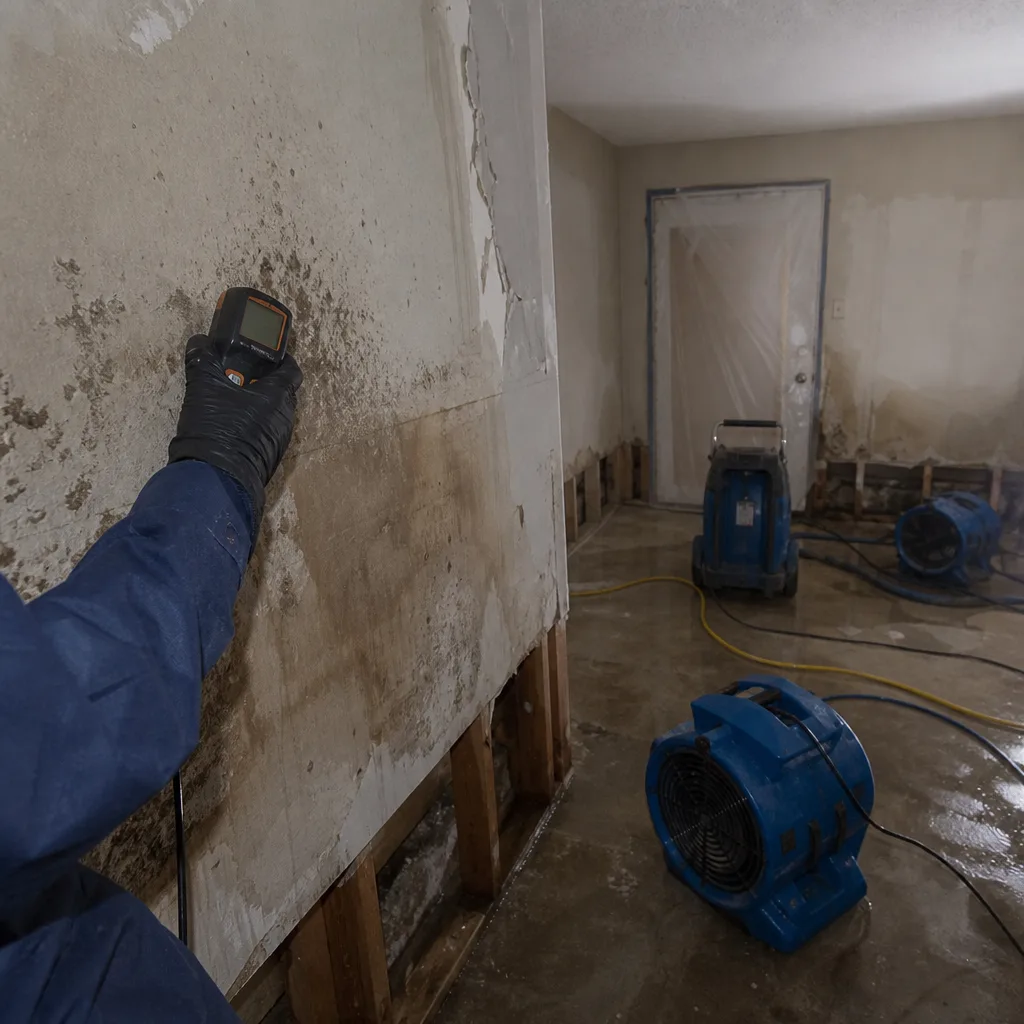 Before
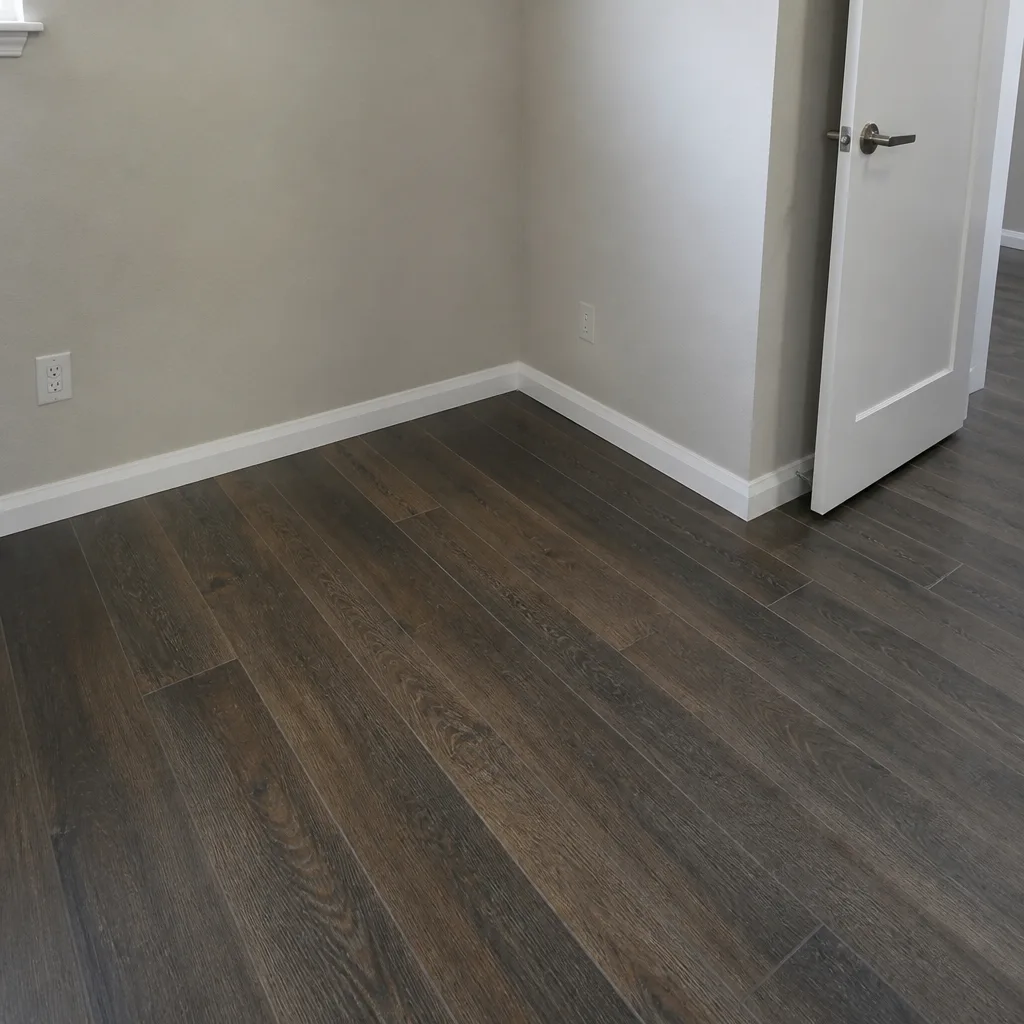 After
After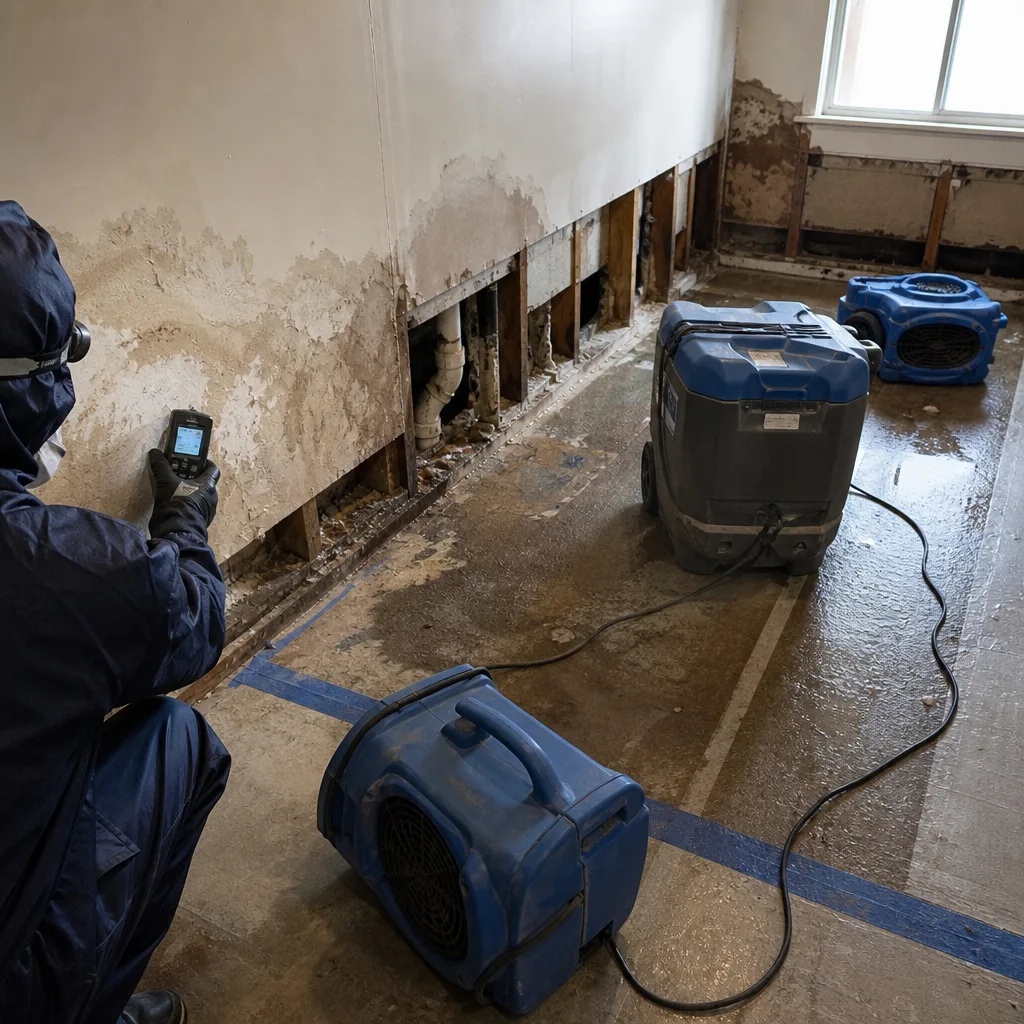 Before
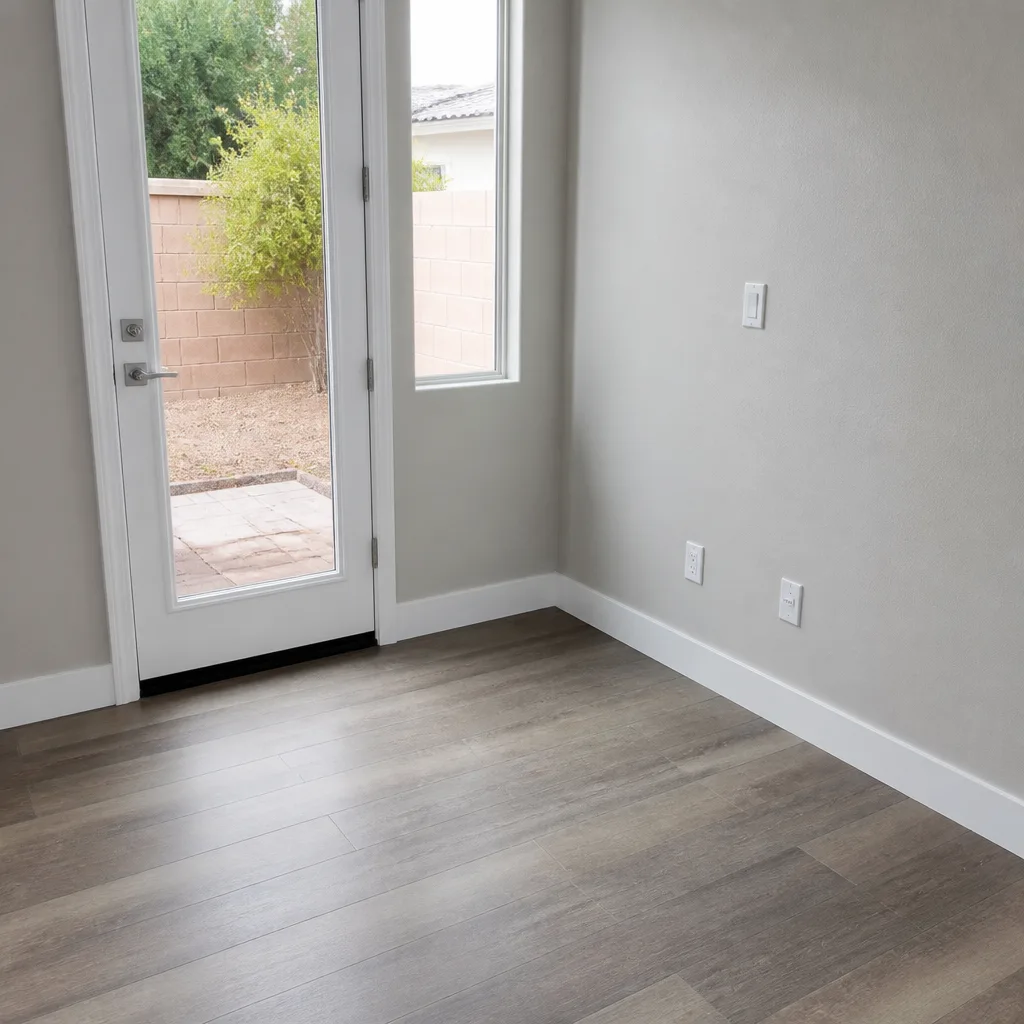 After
AfterDamage Restoration Permits, Codes & Inspections in NV: What You Need to Know
A restoration job that replaces more than 50% of a room’s drywall typically requires a Clark County building permit - but fewer than one in five homeowners ever confirms whether their contractor pulled one. In Henderson, where summer monsoons drive flash-flood water damage through Green Valley and Anthem ranch homes alike, that documentation gap surfaces years later, usually when a title search stops a sale cold. This guide maps exactly which restoration scopes trigger Clark County permit requirements, how permit timelines collide with insurance dry-out deadlines, and what failed inspections actually cost in rework dollars and claim delays. For related reading, see our Damage Restoration Warning Signs: A Henderson Homeowner’s Reference Guide.
Quick Answer
Most structural restoration work in Henderson requires a Clark County building permit when it involves replacing more than 50% of a wall or ceiling surface, altering load-bearing elements, or touching electrical, plumbing, or HVAC systems. Cosmetic repairs - painting, flooring replacement without subfloor work, and cabinet swaps - generally proceed without permits. Your contractor must hold a Nevada State Contractors Board license matching the work scope, and permit inspections must pass before final insurance billing can close.
Table of Contents
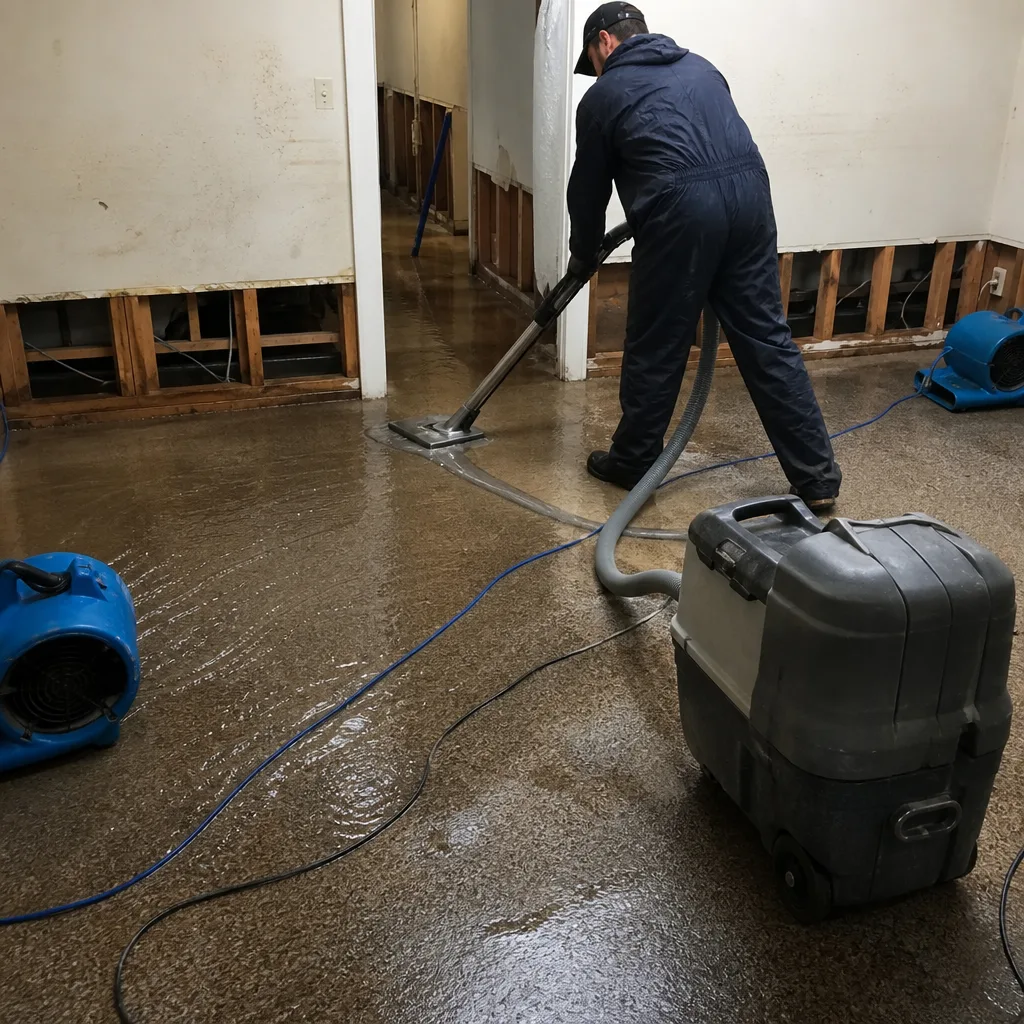
- When Is a Permit Required for Restoration Work in Clark County?
- Which Damage Types Trigger Permits, and Which Don’t?
- How Permit Timelines Interact with Insurance Deadlines
- Nevada Contractor Licensing: B-2 vs. C-3 and What It Means for Your Job
- What Failed Inspections Cost: A Real-Scope Example
- Using Permit Records as Proof When You Sell Your Home
- Henderson-Specific Factors: Climate, Codes, and Common Scopes
- Common Mistakes to Avoid
- When to Call a Professional
- Frequently Asked Questions
 Before
 After
AfterWhen Is a Permit Required for Restoration Work in Clark County?
Clark County Building & Fire Prevention applies the 2018 International Building Code with local amendments, and the permit threshold rests on a simple-sounding standard that proves complicated in practice: any repair or replacement exceeding 50% of a wall, ceiling, or floor assembly’s surface area in a 12-month period triggers a building permit. The county does not exempt insurance-funded restoration from this rule.
What the 50% threshold actually means on a Henderson job site:
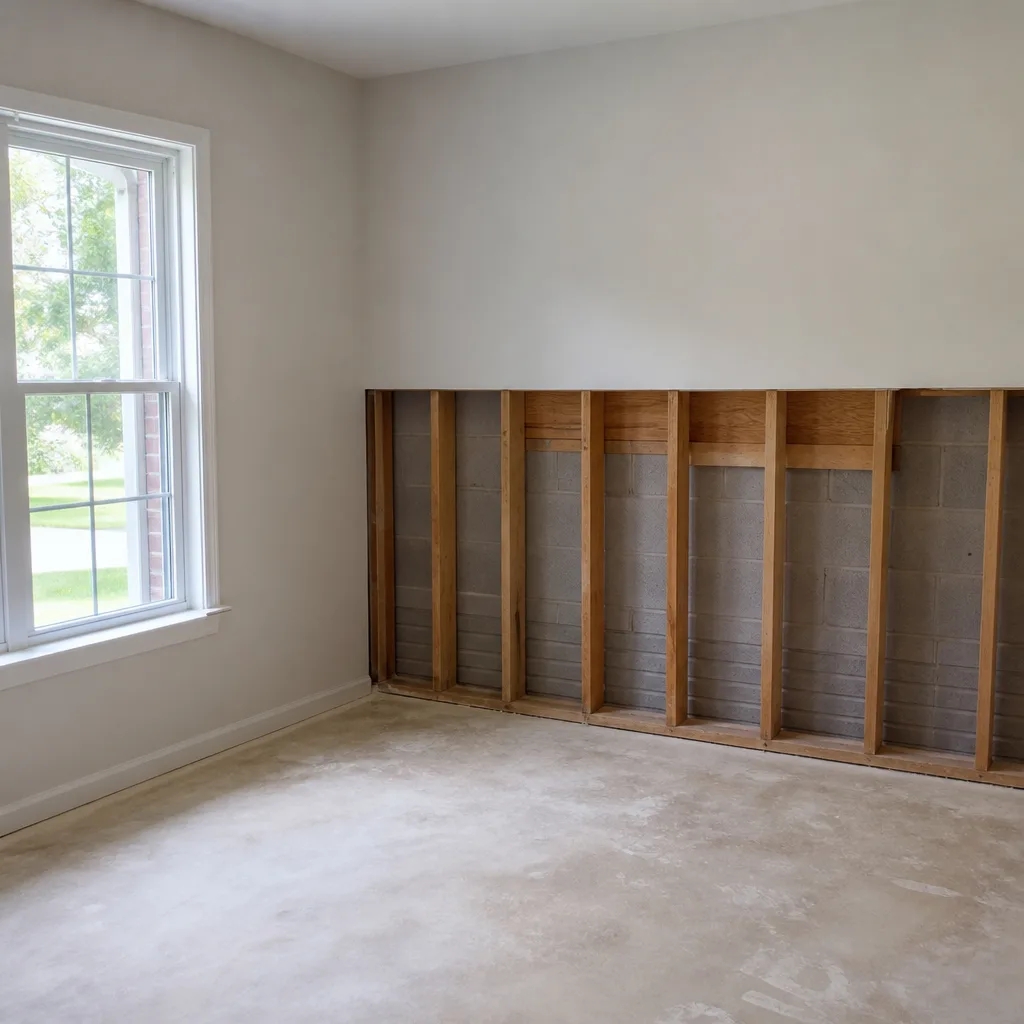
- A water-damaged master bedroom with 280 square feet of affected drywall on three walls - if we replace it all, we have likely crossed the threshold and need a permit
- A kitchen fire with soot-compromised drywall limited to one 8-foot wall section and the ceiling above - if the ceiling is 120 square feet and the wall 64 square feet, and the total room surface exceeds 368 square feet, no permit
- A mold remediation in a Lake Las Vegas guest house where we remove and replace all drywall below 2 feet on all four walls - permit required, and mold abatement documentation must accompany the application
Structural alterations always require permits regardless of percentage. This includes removing or modifying load-bearing walls (common in open-concept fire rebuilds), sistering or replacing floor joists damaged by long-term leaks, and any roof structure work following storm damage. Electrical, plumbing, and mechanical work each carry separate permit requirements through the same Clark County office.
Exemptions exist but are narrower than most contractors admit. Purely cosmetic work - painting, cabinet replacement without plumbing relocation, floor covering installation over intact subfloor - proceeds without permits. But the moment subfloor comes up, or a vanity swap requires moving a drain line, the exemption vanishes.
We’ve reviewed competitor estimates in Henderson where a scope described “drywall patch and paint” but included 60 square feet of new drywall on a 100-square-foot wall. The homeowner signed. No permit was pulled. That documentation gap becomes the homeowner’s problem at closing, not the contractor’s.
Which Damage Types Trigger Permits, and Which Don’t?
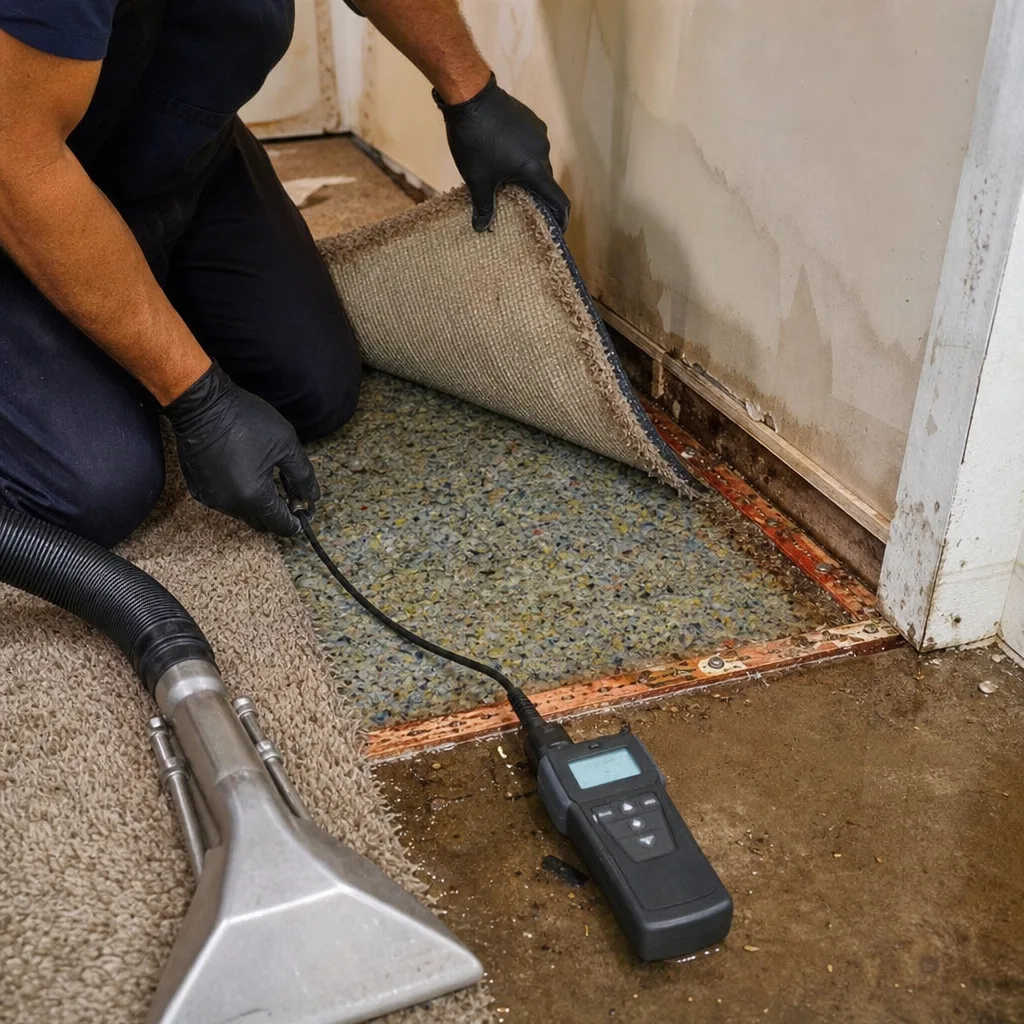
Restoration work sorts into permit categories by what was damaged and how we fix it, not by what caused the damage. Here’s how the major service types map to Clark County requirements.
Water Damage Restoration
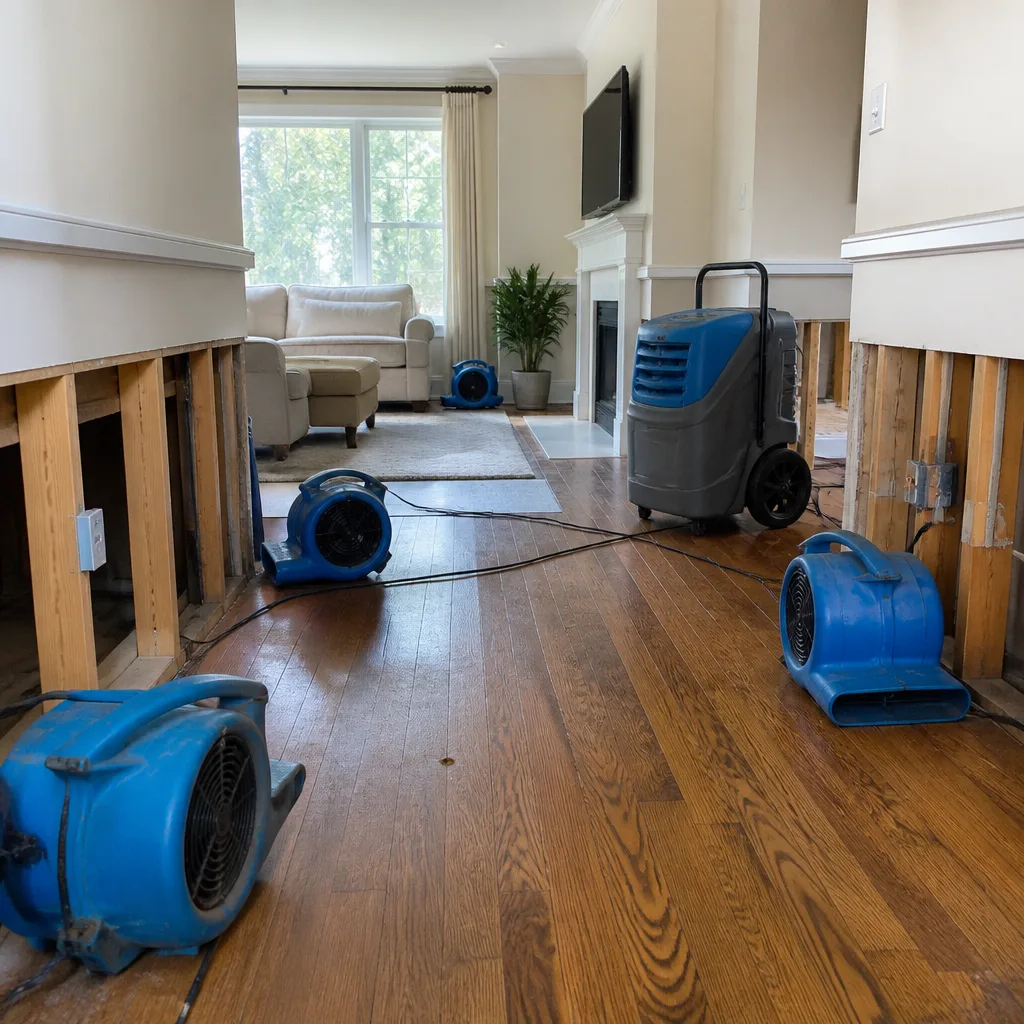
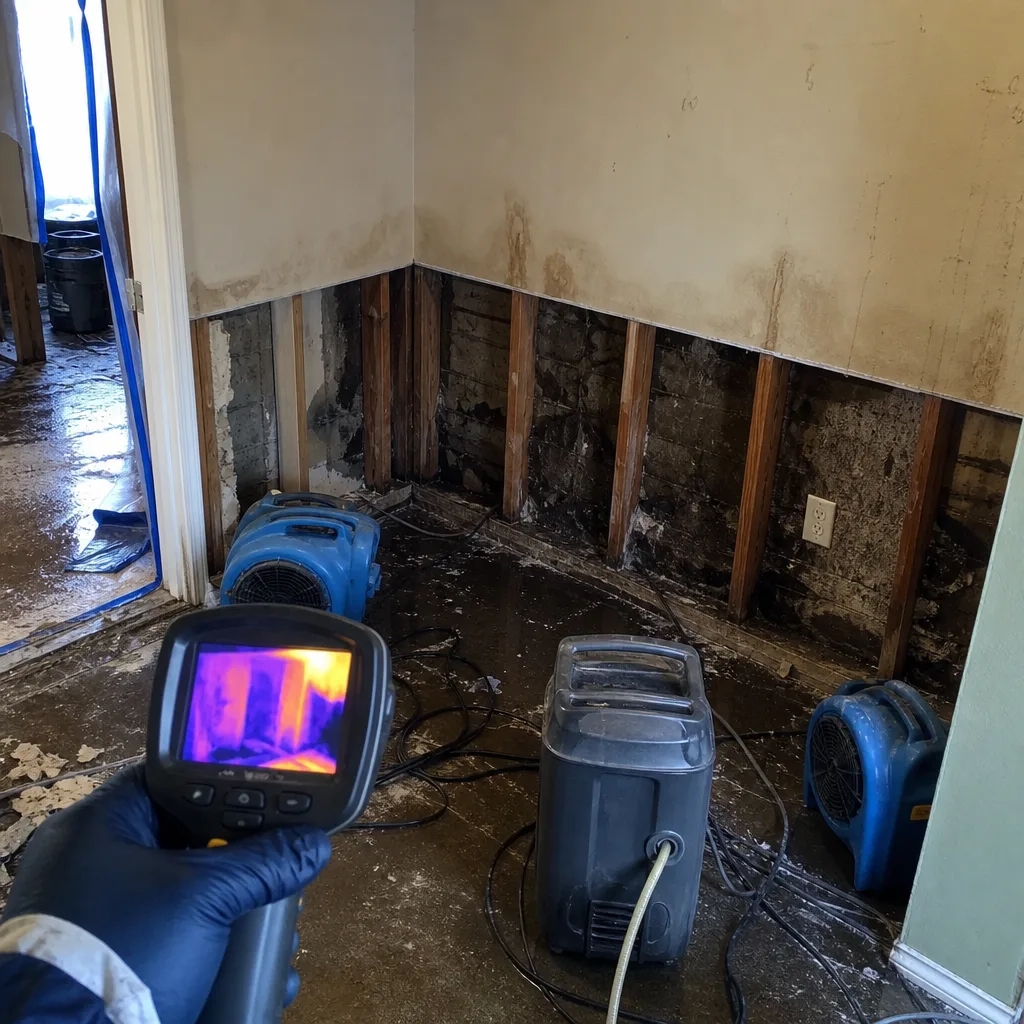
The initial dry-out - extraction, dehumidification, air movement with professional-grade drying systems - never requires permits. This is mitigation, not construction. We deploy Dri-Eaz and Phoenix dehumidifiers, XPOWER and B-Air air movers, and Injectidry systems for hardwood floor drying, documenting psychrometric data (temperature, relative humidity, vapor pressure differential) to IICRC S500 standards. None of this touches building permits.
Permit triggers arrive in the reconstruction phase:
- Drywall replacement exceeding 50% of any room’s surface area
- Subfloor replacement or repair
- Insulation removal and replacement in exterior walls (triggered by energy code compliance requirements)
- Any electrical outlet relocation or replacement after flooding
In Henderson’s older Green Valley neighborhoods, built 1970s through 1990s, we regularly encounter plaster-and-lath construction beneath later drywall layers. Full replacement to modern drywall counts against the 50% threshold for the entire wall assembly, not just the visible surface.
Mold Remediation
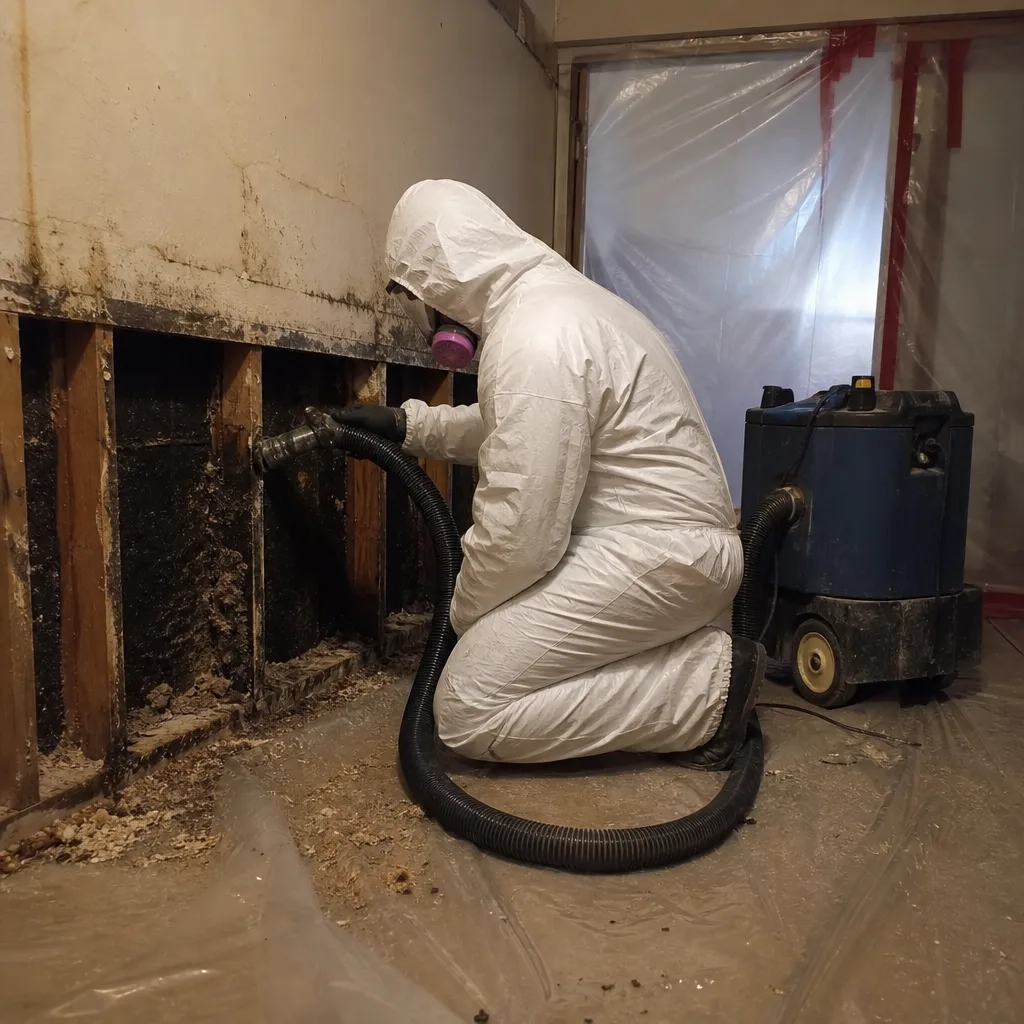
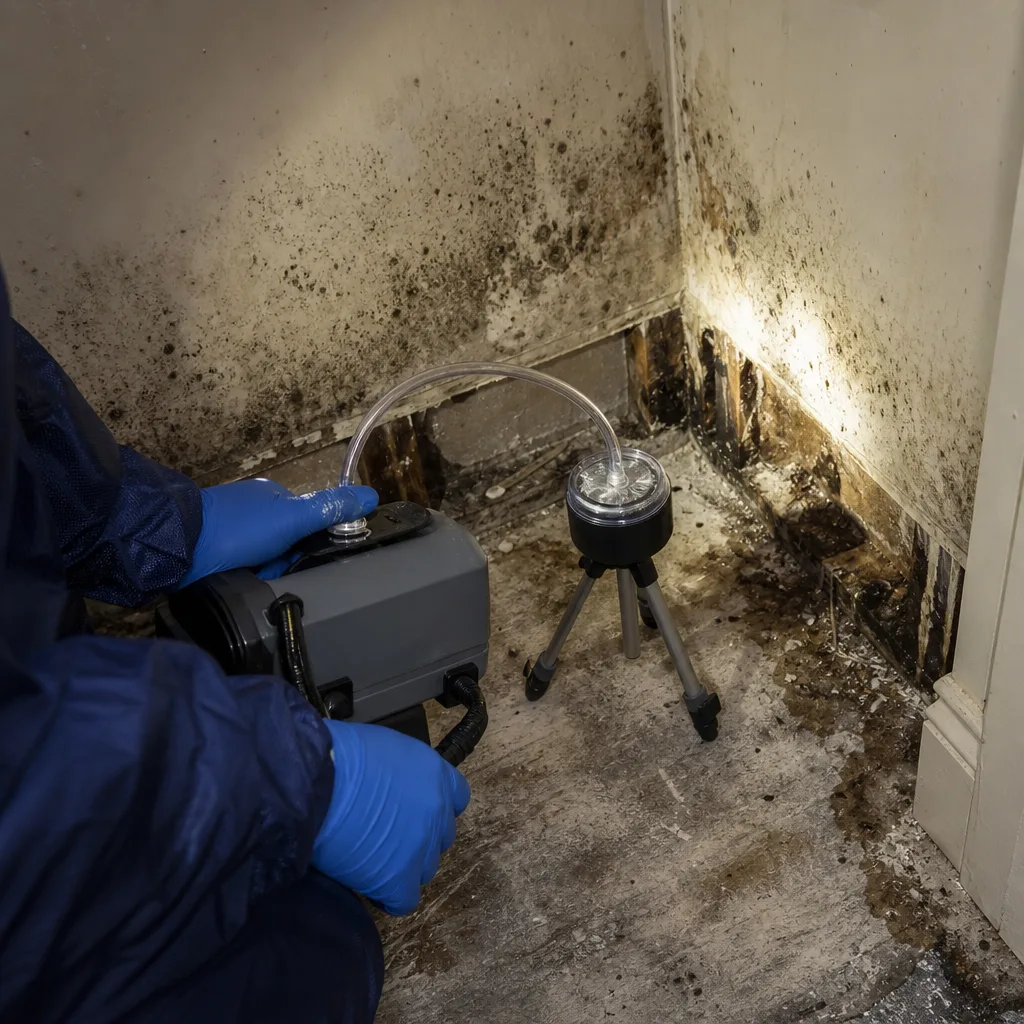
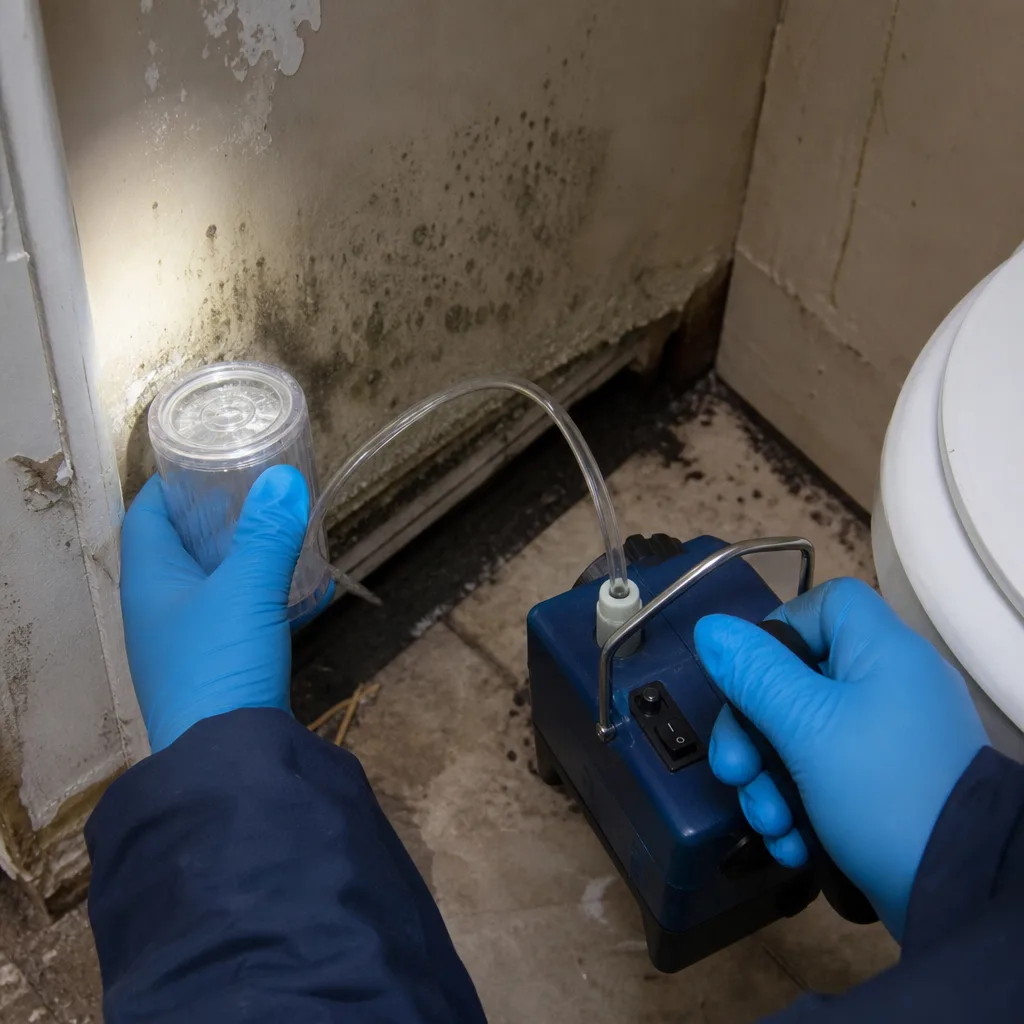
Mold remediation carries a dual documentation burden. Clark County requires a mold abatement permit for any remediation exceeding 10 square feet of visible mold growth, or any project involving HVAC contamination. The permit application must include a mold assessment report from a Nevada-licensed mold assessor - not the remediation contractor - documenting the affected area, moisture source, and clearance criteria.
This separation of assessor and remediator is Nevada law, not county preference. A contractor who offers both assessment and remediation on the same Henderson job is operating outside state requirements.
Fire & Smoke Damage Restoration
Fire restoration almost always triggers permits due to the comprehensive nature of the damage. Even “minor” kitchen fires typically require:
- Electrical permit for outlet and fixture replacement (smoke damage compromises wiring insulation)
- Mechanical permit for range hood and HVAC duct cleaning or replacement
- Building permit for drywall, cabinet, and structural repair exceeding 50% thresholds
The permit complexity scales with the fire’s reach. A garage fire in Anthem that breaches the common wall to living space triggers residential occupancy separation requirements - fire-rated drywall, proper door assemblies - that demand plan review and multiple inspections.
Storm & Disaster Restoration
Roof damage from Henderson’s summer monsoons, particularly in elevated areas like MacDonald Highlands or the foothills above Seven Hills, often involves structural elements. Any roof sheathing replacement exceeding 50% of a roof section’s area requires a building permit. So does structural repair to trusses or rafters, and all window or door replacement (energy code compliance).
Sewage Cleanup and Biohazard
Category 3 water loss cleanup itself requires no permits. The reconstruction that follows - drywall, flooring, subfloor - follows standard 50% rules. Biohazard scenes involving structural contamination may trigger health department coordination, but not building permits unless reconstruction thresholds are met.
How Permit Timelines Interact with Insurance Deadlines
This is where Henderson homeowners lose money they didn’t know was at risk. Insurance policies impose deadlines - for proof of loss, for commencing repairs, for completing work - that run on calendar days, not permit approval cycles. Clark County’s building permit timeline does not pause for your policy language.
Standard Clark County permit processing for residential restoration:
- Over-the-counter permits for simple scopes: same day, if plans are complete
- Plan review for structural or complex scopes: 10-15 business days
- Mold abatement permits: 5-7 business days, contingent on assessor report completeness
- Inspection scheduling: typically 2-3 business days out, longer during peak monsoon season (July-September)
Insurance dry-out deadlines operate differently. Most policies require “reasonable” commencement of repairs, with specific language varying by carrier. Some mandate work begin within 30 days of loss. Others tie coverage to mitigation beginning within 72 hours. The conflict arises when a scope requires permits but the carrier’s preferred vendor starts reconstruction immediately to beat the deadline - without permits. Before you face this dilemma, read our DIY vs Professional Damage Restoration: The Henderson Homeowner’s Decision Guide.
We’ve seen this in Henderson’s Inspirada community, where a burst water heater in a 2019 build required extensive drywall, flooring, and electrical replacement. The carrier’s vendor began drywall installation on day 8, before permit approval. The drywall passed 50% of two rooms. The county inspector flagged it on the rough inspection. Removal and reinstallation added $4,200 in rework, which the carrier initially denied as “contractor error.”
How to manage the conflict:
- Document the permit application date and projected timeline in writing
- Submit that documentation to the adjuster as proof of “reasonable” repair commencement
- Begin permitted and non-permitted work on parallel tracks - dry-out and mitigation proceed while permits process
- Request written carrier acknowledgment that permit compliance delays do not void coverage
- Photograph all pre-permit conditions to prove work had not advanced beyond mitigation
Our standard practice at DryMark Restoration Henderson: we submit permit applications within 24 hours of scope approval, provide the homeowner with the application confirmation number for carrier submission, and sequence work so that no permit-required trade begins before approval. The photo record on every visit, documented to IICRC standards, provides timestamped proof of what was and wasn’t done when.
Haven Standard, Clause 1 applies here with unusual force: a written price before work starts includes explicit line items for permit fees, inspection scheduling, and potential rework contingencies. No homeowner should discover these costs after work begins.
Nevada Contractor Licensing: B-2 vs. C-3 and What It Means for Your Job
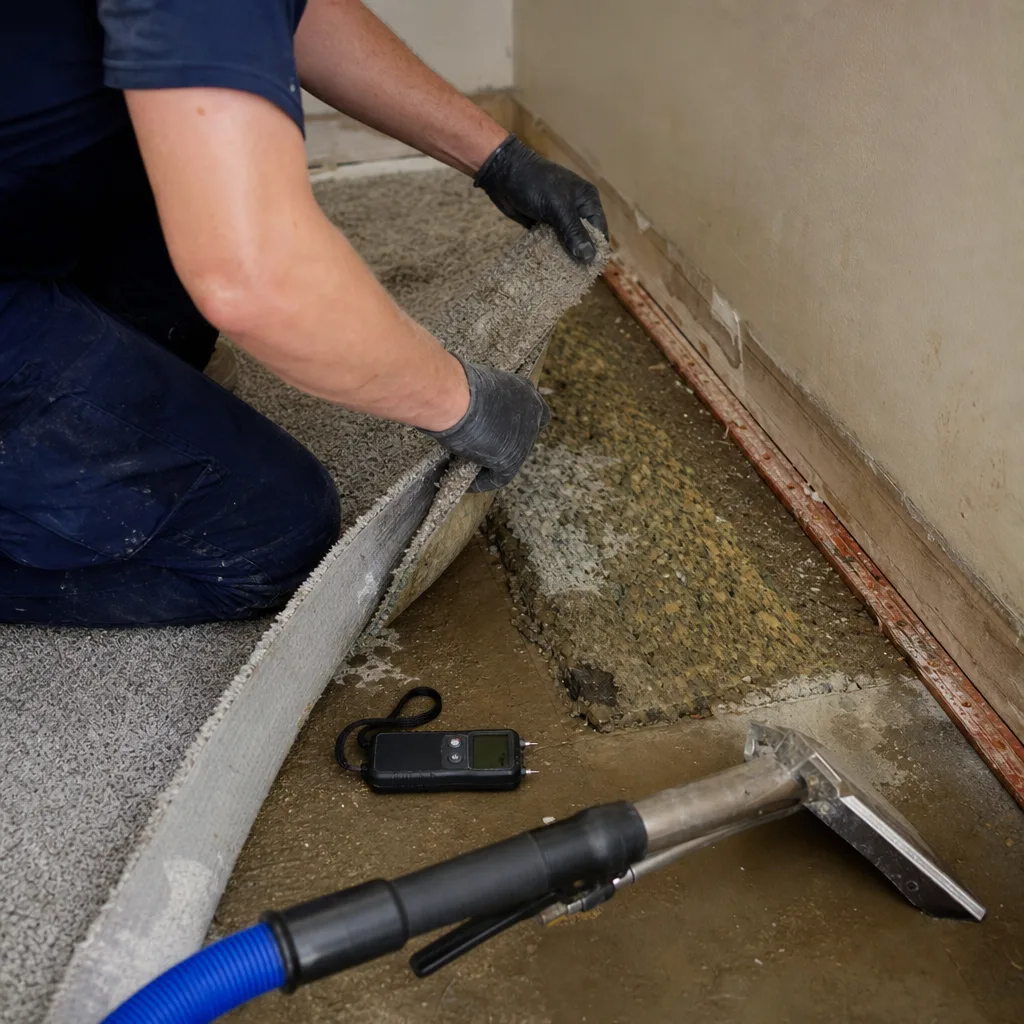
Nevada State Contractors Board licensing requirements create another documentation layer that homeowners rarely verify. The license class on a contractor’s pocket card determines what work they can legally perform under a restoration contract. Mismatch the license to the scope, and the contract may be unenforceable - a fact that emerges when something goes wrong.
B-2 Residential and Small Commercial License
The B-2 allows construction, alteration, or repair of residential structures and small commercial buildings not exceeding three stories. For restoration, this covers:
- Structural repairs to framing, subfloor, and roof assemblies
- Drywall installation and finishing
- General carpentry, including cabinet and trim replacement
- Coordination of subcontracted trades (electrical, plumbing, mechanical) - but not direct performance of those trades
A B-2 holder can manage your full reconstruction scope but must subcontract electrical, plumbing, and HVAC work to appropriately licensed trades. The B-2 contractor remains responsible for permit compliance and inspection coordination.
C-3 Carpentry, Maintenance and Minor Repairs
The C-3 is more limited. It covers:
- Finish carpentry: trim, doors, cabinets, hardware
- Minor repairs not altering structural elements
- Maintenance work not requiring building permits
A C-3 contractor cannot legally perform structural repairs, manage permit-required reconstruction, or coordinate subcontracted trades on permit-bearing jobs. Yet we regularly encounter Henderson restoration scopes where a C-3 contractor has signed a contract including drywall replacement, subfloor repair, and electrical coordination - all outside their license authority.
Additional Required Licenses
Specialized restoration work demands additional credentials:
- Mold remediation: Nevada Mold Remediation License, separate from contractor licensing
- Asbestos abatement: Nevada Division of Environmental Protection certification
- Lead-safe renovation: EPA RRP certification for pre-1978 homes
- Electrical, plumbing, mechanical: respective C-class licenses
Verifying a contractor’s license is straightforward: the Nevada State Contractors Board website provides real-time license status, classification, bond information, and disciplinary history. For a complete walkthrough, see How to Hire a Damage Restoration Contractor in Henderson: A Step-by-Step Guide. We provide our license number on every estimate and encourage homeowners to verify it. A contractor who hesitates to share their license number is signaling something worth investigating.
The documentation-first approach matters here. We maintain copies of all subcontractor licenses, bond certificates, and insurance endorsements in the job file, available to the homeowner and adjuster on request. When an insurer questions whether work was performed by qualified trades, we produce the proof - not a verbal assurance.
What Failed Inspections Cost: A Real-Scope Example
Failed inspections in Clark County carry direct costs - rework labor, materials, permit re-inspection fees - and indirect costs that hit harder: claim payment delays, extended temporary housing coverage disputes, and the documentation gaps that cause most failures in the first place.
A real scope from 2023, Henderson, MacDonald Ranch area:
A supply line leak in a 2016 build saturated two bathrooms, a hallway, and the master bedroom. Initial mitigation proceeded correctly: extraction, drying with Phoenix LGR dehumidifiers and Injectidry hardwood floor system, moisture readings documented daily to IICRC S500 standards. The reconstruction scope included:
- 340 square feet of drywall replacement (two bathrooms, hallway - permit required, exceeded 50%)
- Subfloor repair in master bath (permit required, structural element)
- Electical: GFCI relocation and new exhaust fan circuits (separate electrical permit)
- Plumbing: shower valve replacement (separate plumbing permit)
- Flooring: tile and LVP installation (no permit, cosmetic over intact subfloor)
The failure point: the general contractor, a B-2 holder, pulled the building permit but relied on an unlicensed electrician who failed to obtain the separate electrical permit. The rough electrical inspection was never performed. At final building inspection, the county inspector noted live electrical work without inspection history. Building permit held. Final inspection failed.
Cost breakdown:
- Electrical permit retroactive application and fees: $287
- Exposed wall opening for electrical inspection: $640 (drywall removal, protection, reinstallation)
- Re-inspection scheduling delay: 11 calendar days
- Homeowner’s extended temporary housing: $1,320 (disputed by carrier as “contractor delay”)
- Claim payment hold pending final inspection: 23 days
The documentation gap that caused this: no written verification that the electrician held a current C-10 license and had pulled their own permit. The general contractor’s word was accepted. At DryMark Restoration Henderson, every trade’s license is photocopied, verified active on the state website, and filed with the job’s permit application. The photo record on every visit includes timestamped images of electrical rough-in before wall closure. We do not close walls on uninspected work - Haven Standard protocol, not preference.
The 365-Day Done Right Promise under The Haven Standard covers this scenario explicitly: if inspection failure results from our documentation or coordination failure, we absorb rework costs. The guarantee is written, not verbal, and stamped on every job file.
Using Permit Records as Proof When You Sell Your Home
Permit records are permanent, publicly searchable, and increasingly central to real estate transactions in Henderson’s appreciating market. A home listed in Green Valley South, Anthem, or the master-planned communities of Inspirada and Cadence will face buyer scrutiny that includes permit history review - not just for additions, but for restoration work that affected structure, electrical, or plumbing systems.
Unpermitted restoration work surfaces in three ways:
- Title company search of Clark County permit records reveals work without matching permits
- Buyer’s home inspector notes newer drywall, electrical, or plumbing without permit documentation
- Seller disclosure questionnaire asks directly about water damage, mold, fire, or structural repairs
The consequences range from delayed closing to price renegotiation to outright deal cancellation. In Nevada, sellers must disclose material defects and prior damage. A restoration job that was properly permitted, inspected, and closed provides defensible proof that the work was performed to code - transforming a potential liability into a documented asset.
What to retain from every restoration job:
- Final permit card with all inspection sign-offs
- Contractor’s final invoice referencing permit numbers
- Certificate of completion or occupancy (if required)
- Photo documentation of work in progress and completion
- Written warranty or guarantee documentation (Haven Standard, 365-Day Done Right Promise)
We provide these documents as standard deliverables on every DryMark Restoration Henderson job, not as upsells. Explore more guides & resources on protecting your home investment. The homeowner receives a organized file: permit copies, inspection records, photo DVD or download link, and the signed warranty. When that homeowner lists their Henderson property years later, they have proof.
Conversely, a homeowner who accepted “we’ll handle everything” without documentation has nothing to show. We’ve been called to consult on pre-sale situations where a 2019 water damage restoration - performed by a since-defunct contractor - left no paper trail. The seller faced a $2,800 permit compliance investigation and potential wall opening for inspector verification. The original work was likely code-compliant. Without documentation, “likely” doesn’t close a sale.
Henderson-Specific Factors: Climate, Codes, and Common Scopes
Henderson’s position in the Mojave Desert creates restoration conditions distinct from Las Vegas proper and markedly different from national norms. Understanding these local factors prevents permit and code surprises.
Monsoon-Driven Water Damage Patterns
July through September brings localized intense rainfall to Henderson, particularly in elevated areas. Flash flooding overwhelms drainage in older Green Valley neighborhoods with original 1980s infrastructure, while newer master-planned communities face overland flow from upslope development. The damage pattern: sudden, extensive water intrusion into finished basements (rare but present in hillside homes), garage-to-living-space breaches, and roof leaks in tile roofs with degraded underlayment.
Permit implications: monsoon damage often affects multiple rooms simultaneously, pushing drywall replacement quickly past 50% thresholds. The compressed timeline - homeowners want dry-out before the next storm - pressures contractors to skip permits. We sequence instead: mitigation begins immediately, permit applications submit within 24 hours, reconstruction waits for approval.
Soil and Foundation Considerations
Henderson’s caliche-rich soils and expansive clay layers in certain areas create foundation movement that cracks drywall and opens water intrusion paths. Restoration scopes in areas like Whitney Ranch or the foothills must distinguish between water damage requiring remediation and ongoing foundation issues requiring engineering. We document with photos, moisture readings, and - when foundation movement is suspected - written recommendation for structural engineer evaluation before reconstruction permits are sought.
Energy Code Compliance
Clark County enforces energy code requirements that affect restoration reconstruction. Any exterior wall drywall replacement triggers inspection for proper insulation R-value and air sealing. Window replacement requires NFRC-rated products. These are not optional upgrades - they are code-mandated elements of permitted work that affect scope and pricing.
Age-of-Housing Stock Variations
Henderson’s housing spans from 1950s ranch homes near Water Street to 2020s builds in Cadence. Permit requirements are uniform, but underlying conditions vary enormously:
- Pre-1978 homes: lead-safe renovation requirements, potential asbestos in flooring and insulation
- 1970s-1990s Green Valley: original polybutylene plumbing, aluminum wiring in some subdivisions
- 2000s-2010s builds: Chinese drywall in certain developments (corrosive, requires full replacement)
- Newer construction: compliance with current energy and structural codes, typically straightforward permitting
Our written scopes specify the construction era and any code-triggered requirements that affect permit type and inspection sequence. A homeowner in a 1976 Henderson ranch receives different documentation than one in a 2019 Inspirada townhome - not because we treat them differently, but because the codes and permit paths differ.
Common Mistakes to Avoid
- Assuming your contractor pulled permits. Verify directly with Clark County Building & Fire Prevention using the permit application number; do not accept “it’s handled” as documentation.
- Starting reconstruction before permit approval to beat insurance deadlines. This creates uninspected work that must be opened for inspection or removed entirely, costing more than the delay would have.
- Hiring a C-3 contractor for structural restoration work. The C-3 license does not authorize structural repair, permit coordination, or trade management; work performed outside license class may be unenforceable.
- Accepting verbal permit status updates. Insist on written confirmation with permit number, application date, and scheduled inspection dates - this is standard in our documentation package.
- Discarding permit documents after work completion. Retain all permit records, inspection sign-offs, and completion certificates for the duration of home ownership; they are essential at sale.
- Ignoring mold assessment requirements for remediation permits. Nevada law requires assessment by a licensed mold assessor separate from the remediation contractor; skipping this invalidates the abatement permit.
- Failing to verify subcontractor licenses for electrical, plumbing, and HVAC work. The general contractor’s B-2 license does not cover trade work; each trade must hold and display their own current license.
When to Call a Professional
Call a licensed restoration contractor when your damage scope includes any structural element, exceeds 25 square feet of drywall in a single room, involves electrical or plumbing systems, or carries mold concerns. The permit determination is complex enough that guessing wrong costs thousands in rework. DryMark Restoration Henderson offers free estimates in Henderson - call (725) 696-9449. We provide a written price before work starts, every time, with permit costs line-itemed and no scope-creep additions once the crew is inside. Our live person answers every call, 24 hours a day, 7 days a week, with no voicemail on emergency lines.
Frequently Asked Questions
Visit the Clark County Building & Fire Prevention online permit search and enter your property address or the permit application number your contractor should have provided. Active permits display application date, scope description, and scheduled inspection dates. If no permit appears for work already in progress, work has stopped or was never properly permitted. Call us at (725) 696-9449 for a free second opinion on any written estimate - we’ll review the scope and permit requirements at no charge.
Most standard homeowners policies include permit fees as part of “reasonable repair costs,” but coverage varies by carrier and policy language. The key is documentation: permit fees must be line-itemed in the written scope submitted to the adjuster, not added later as “extras.” Our estimates explicitly separate permit costs, inspection fees, and potential rework contingencies so carriers can review and approve them upfront. Call (725) 696-9449 for an exact quote on your scope - estimates are free.
Over-the-counter permits for simple scopes process same-day with complete applications. Plan review for structural or complex scopes takes 10-15 business days. Mold abatement permits require 5-7 business days contingent on assessor report completeness. Inspection scheduling typically runs 2-3 business days, extending to 5-7 during peak monsoon season (July-September). We submit applications within 24 hours of scope approval and provide confirmation numbers for your carrier documentation.
Failed inspections require correction of the cited deficiency and scheduling of a re-inspection, typically at additional fee. The work cannot proceed past the failed inspection point until correction and re-pass. Common failure causes in Henderson restoration: unlicensed trade work, drywall closure before rough inspection, inadequate insulation in exterior wall repairs, and missing fire-blocking in garage-to-living-space repairs. Our documentation protocol - photo record on every visit, trade license verification, no wall closure before inspection - prevents most failures before they occur.
Yes. Nevada law requires mold assessment by a licensed mold assessor independent from the remediation contractor. A contractor who offers both services on the same job is operating outside state requirements, and any abatement permit based on their assessment may be invalid. We maintain relationships with licensed assessors in Henderson and coordinate their involvement as a standard part of mold remediation scopes, with costs disclosed in the written estimate.
Yes. Title companies, buyer agents, and home inspectors increasingly verify permit records against visible work. Unpermitted structural, electrical, or plumbing restoration can trigger renegotiation, delayed closing, or deal cancellation. The remedy - retroactive permitting - often requires opening walls for inspector verification, costing substantially more than original permit compliance. We provide complete permit documentation as a standard deliverable on every job, specifically to prevent this scenario at sale time.
The Bottom Line
Permits, codes, and inspections are not administrative obstacles to restoration work - they are the documentation framework that transforms a contractor’s promise into verifiable, transferable proof of completed work. In Henderson’s competitive real estate market, that proof protects your investment at sale. For insurance claims, it prevents the payment delays and rework costs that arise from uninspected work. The contractors who treat permits as optional are gambling with your money, not theirs. Demand written verification of every permit, every inspection, and every trade license before work begins.
Written by Alicia Brennan, Owner at DryMark Restoration Henderson, serving Henderson since 2011.