
Last updated September 23, 2026
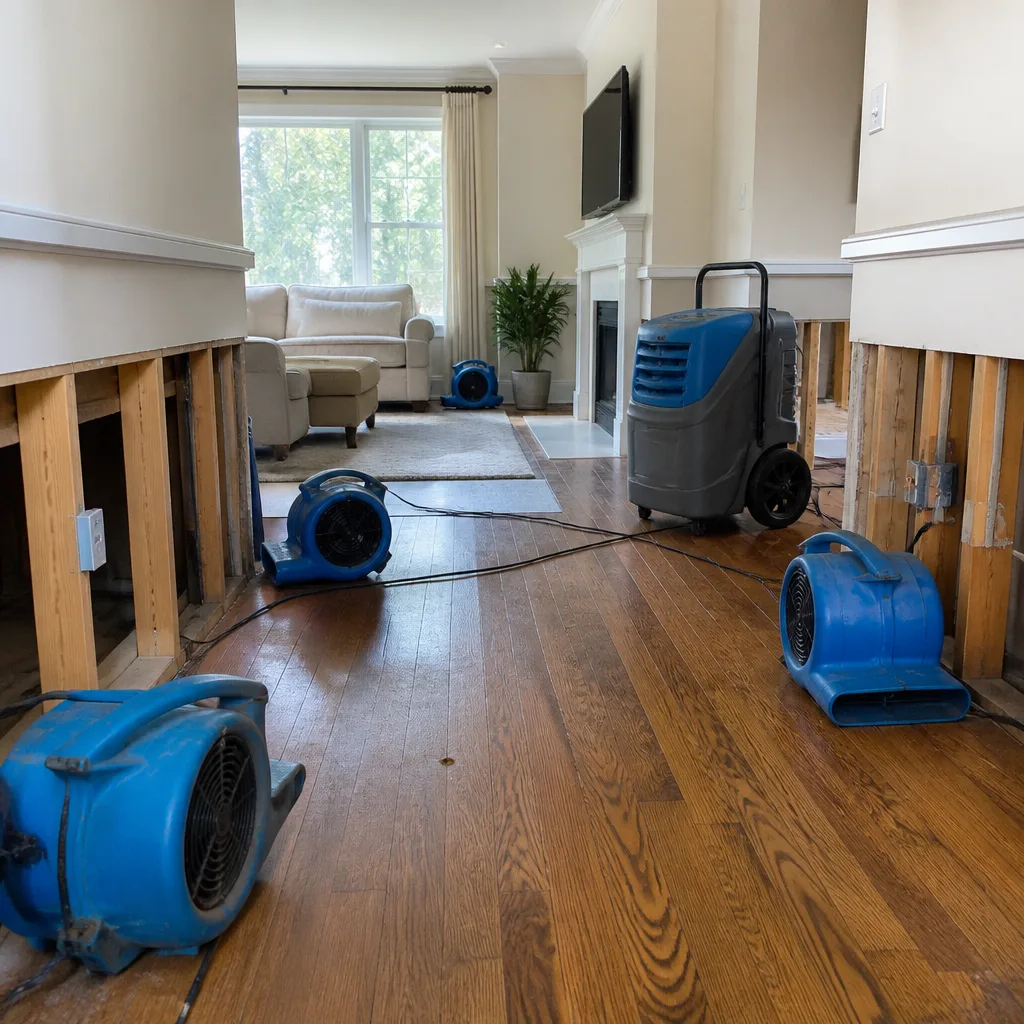
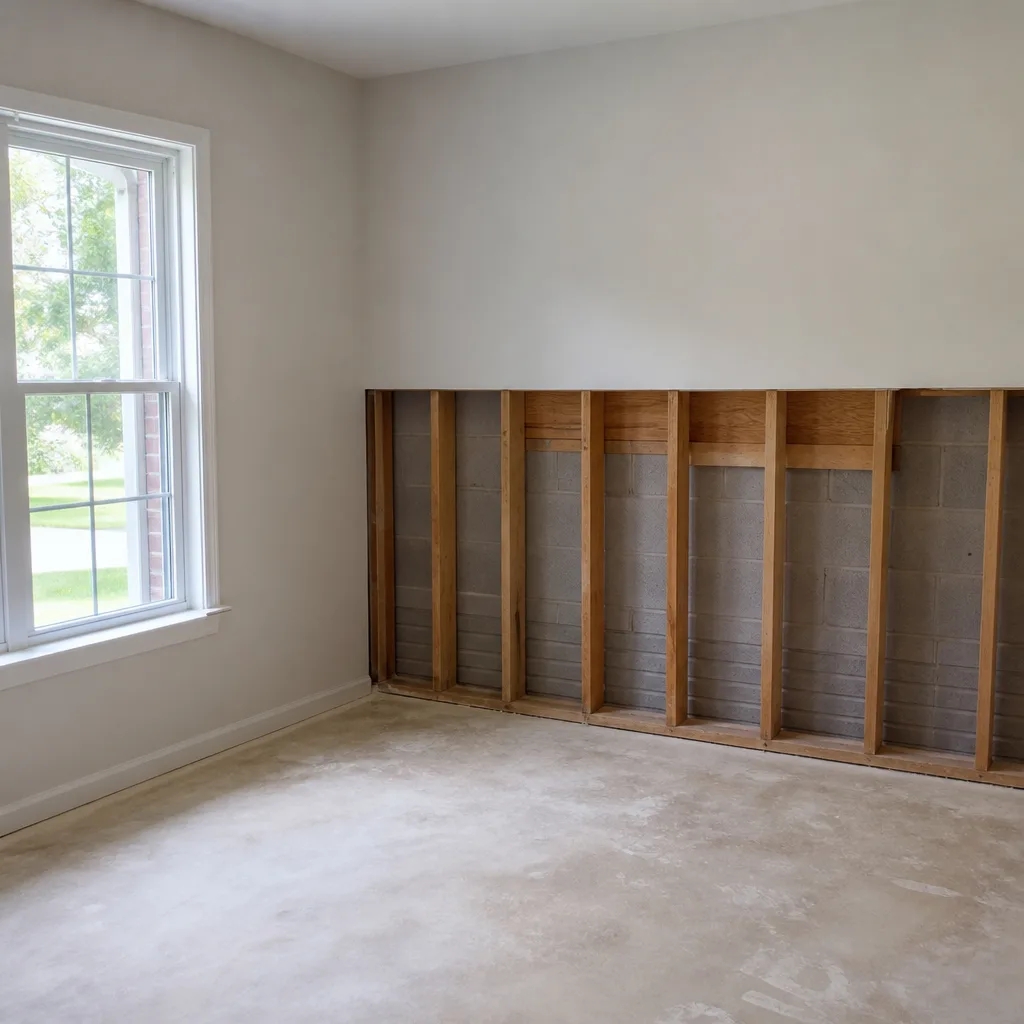
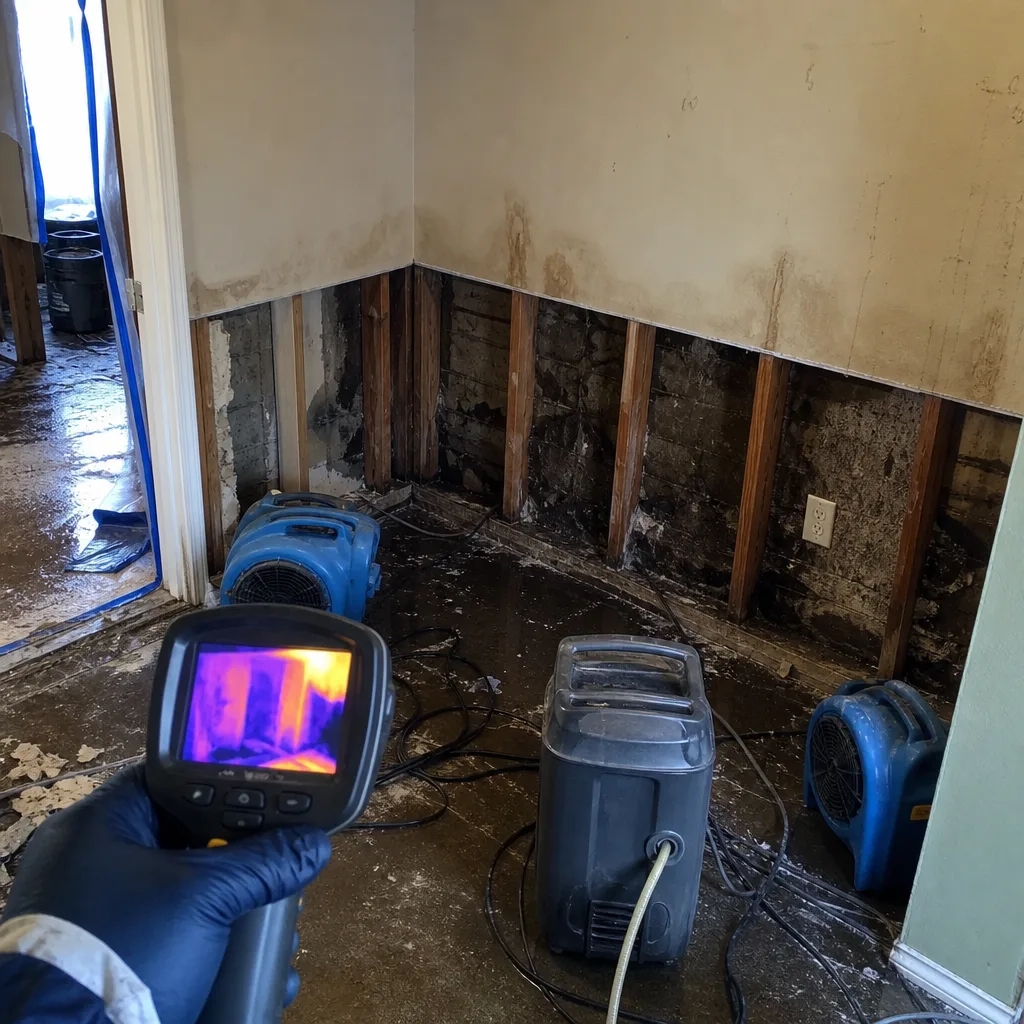
Free visual inspection and a written scope of work before any mitigation begins - photos, moisture readings, and drying logs go in your claim file
The scope we write is the scope we bill. Anything new gets shown to you, in writing, before we touch it.

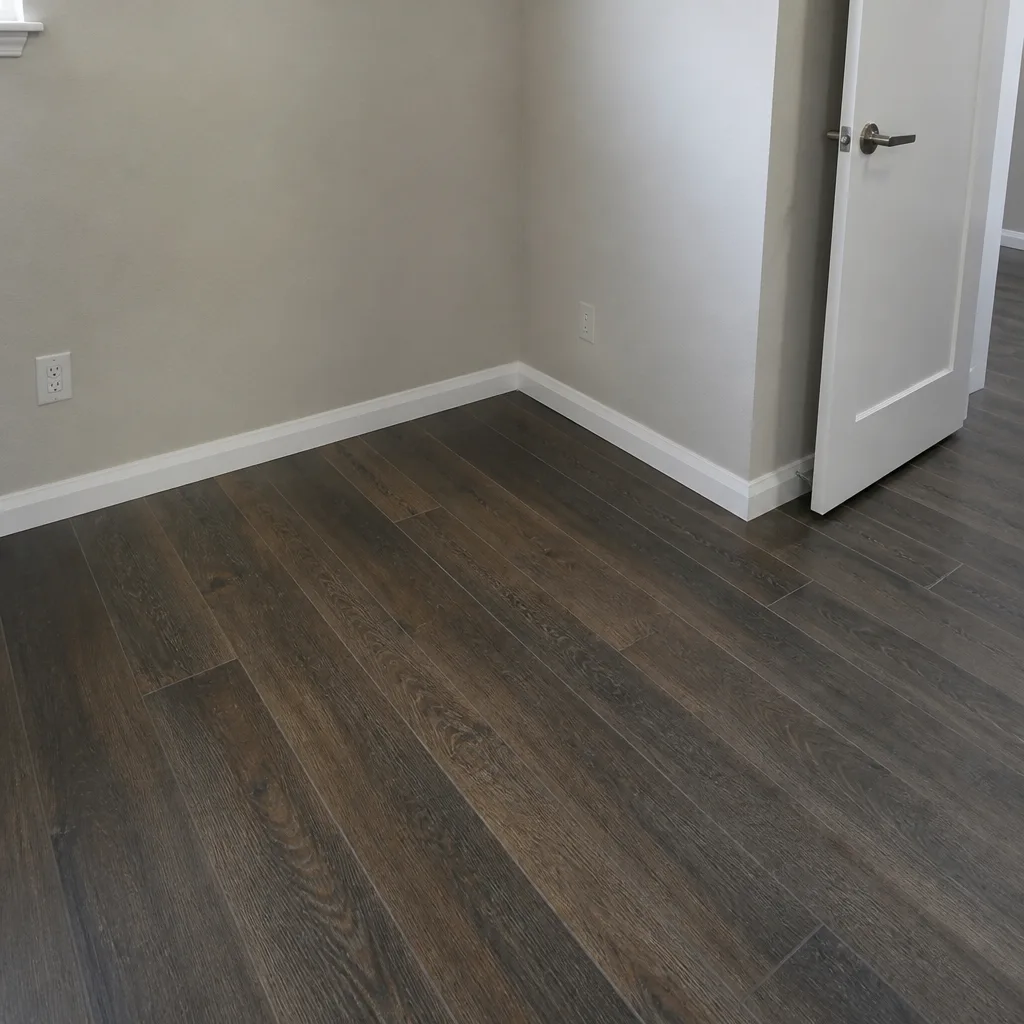
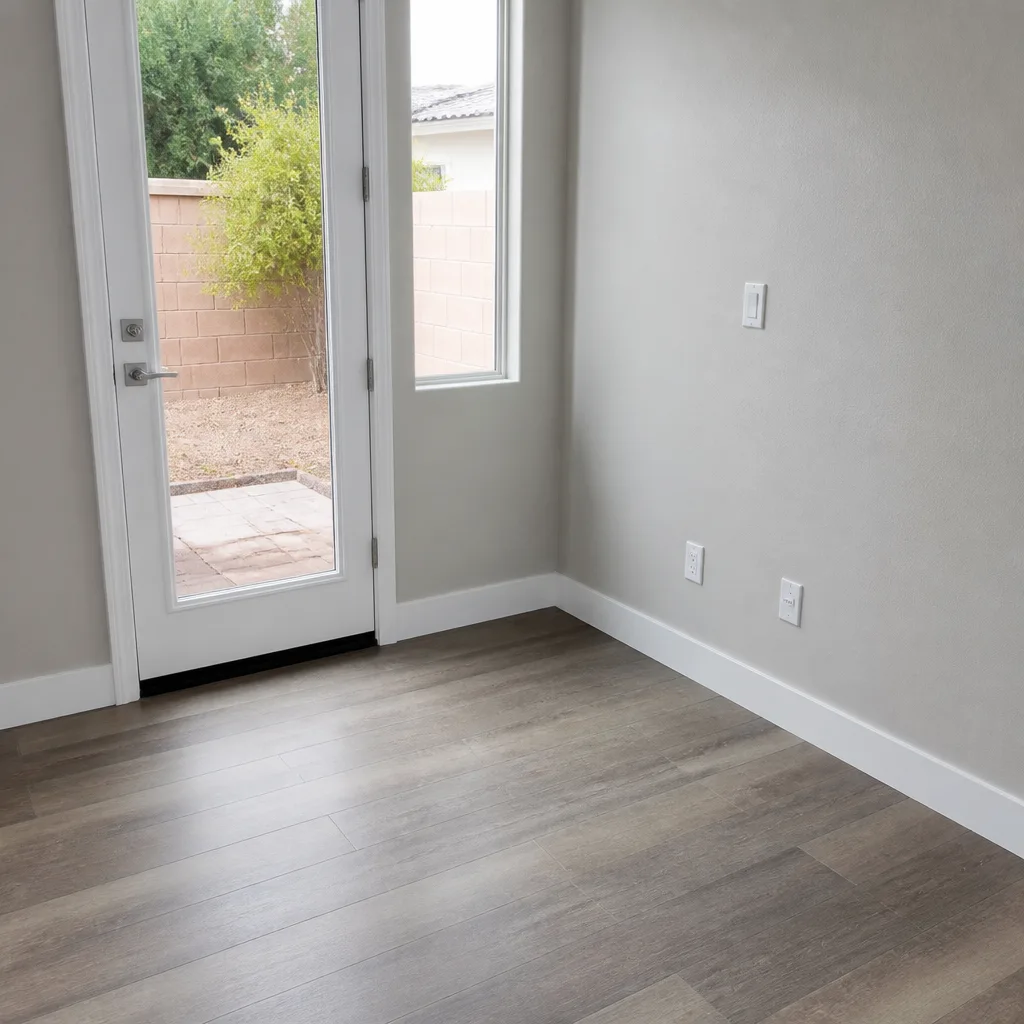
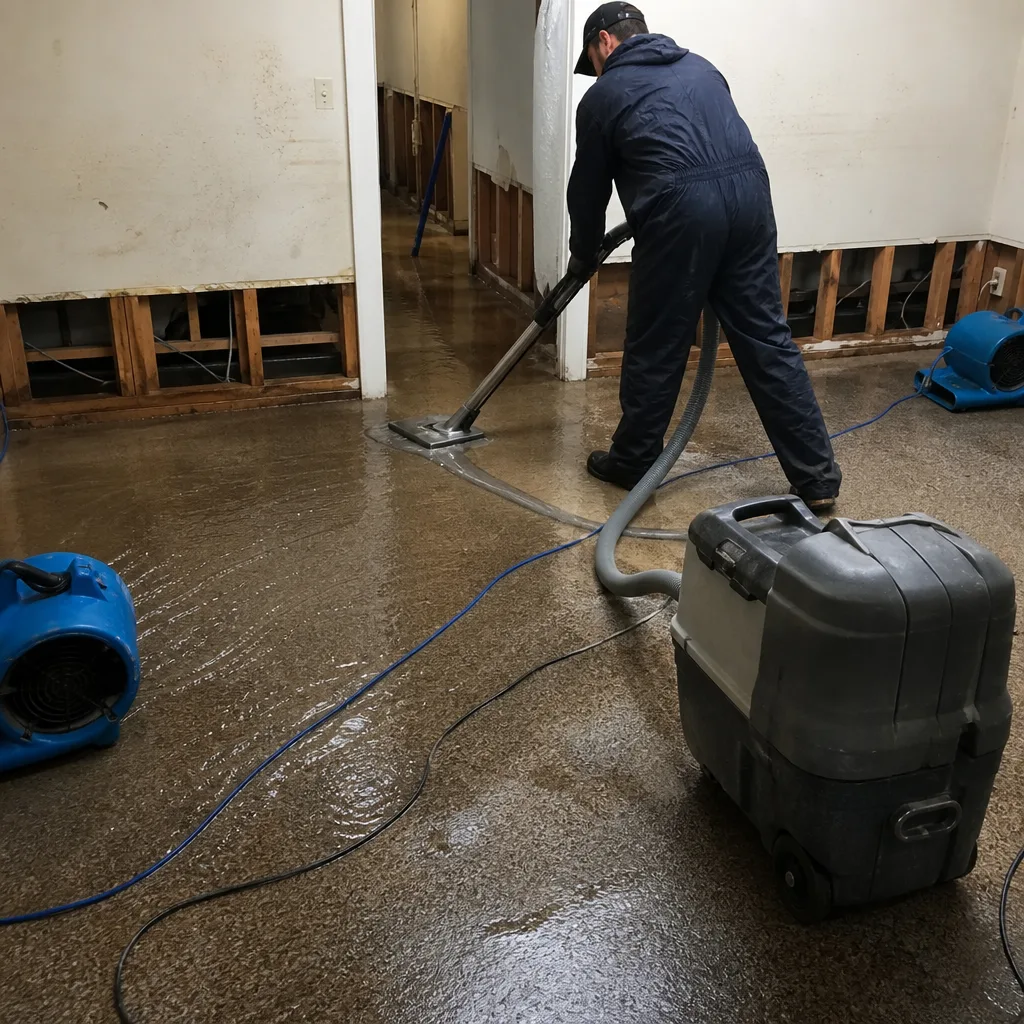
 Before
 After
After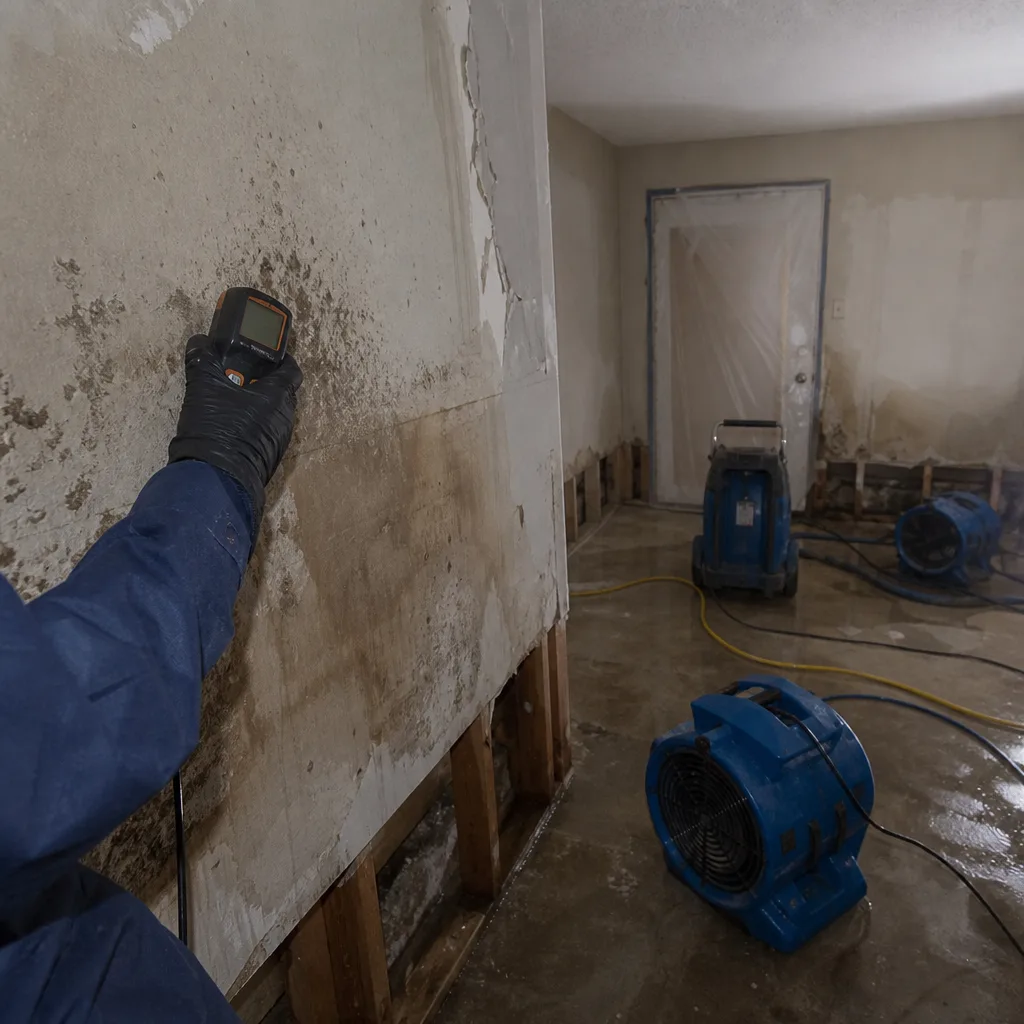 Before
 After
After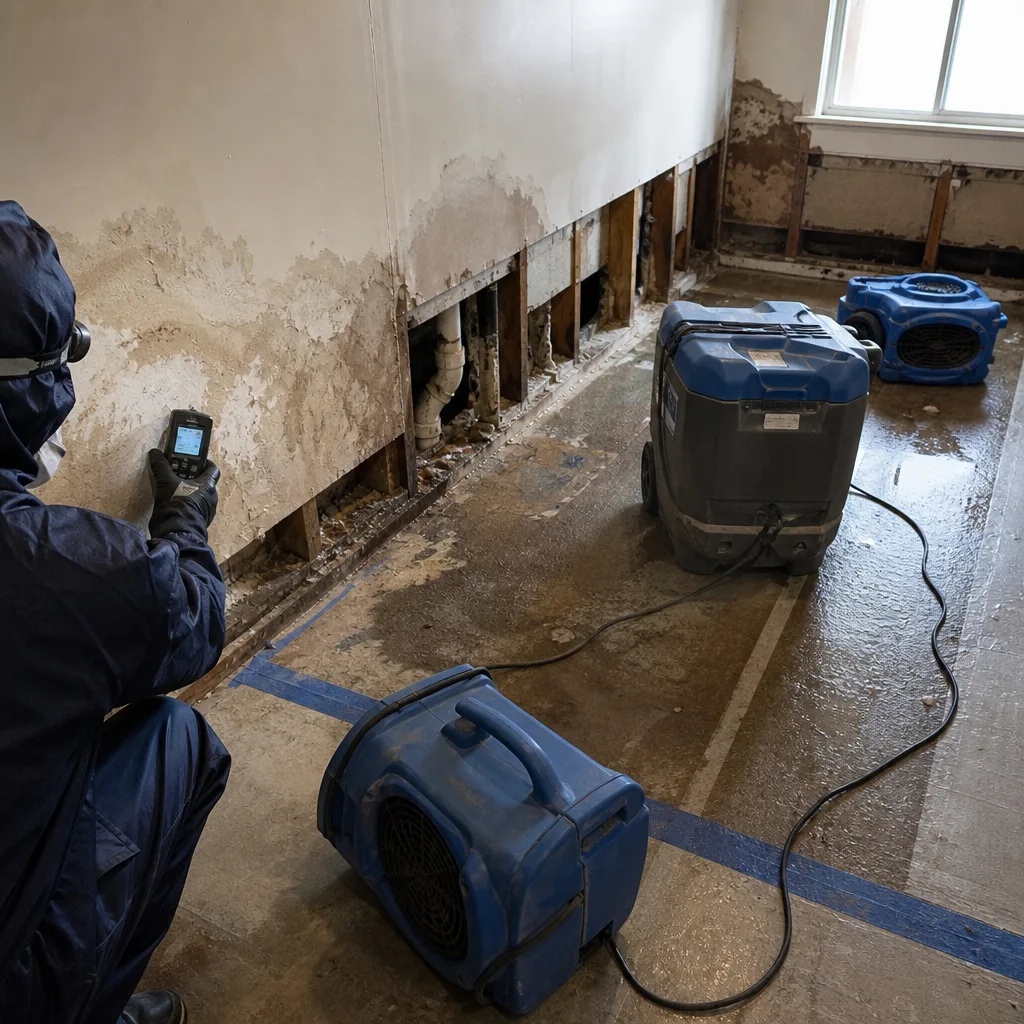 Before
 After
AfterDamage Restoration Warning Signs: A Henderson Homeowner’s Reference Guide
A moisture reading of 16% inside a drywall cavity is invisible to the eye and odorless. But mold is already growing. By the time a brown stain appears on your living room ceiling in Henderson, that reading has crossed 25% and the affected square footage has doubled, sometimes tripled. Most guides tell you to watch for stains and smells. Those are late-stage indicators. The real warning signs are numbers you can measure with a $30 tool from a hardware store on Stephanie Street. This guide shows you what to measure, where to measure it, and how to document those readings so they become evidence if you ever file a claim, and you can explore more guides & resources on our blog.
Quick Answer
The earliest damage restoration warning signs in a Henderson home are quantifiable moisture and humidity readings, not visible stains or odors, as detailed in our Seasonal Damage Restoration Care for Henderson: Year-Round Homeowner’s Guide. Sustained indoor humidity above 60% RH for 48 hours, drywall moisture content above 16%, or flooring cupping greater than 1/16 inch across a 12-inch span all indicate active damage before mold becomes visible or smells develop. Document each reading with a photo, date, location, and benchmark comparison to create admissible claim evidence.
Table of Contents
- Measurable Early Indicators: The Numbers That Matter
- Seven High-Risk Locations Every Henderson Homeowner Should Monitor
- Henderson-Specific Locations Where Warning Signs Are Most Commonly Missed
- How to Use a Consumer Moisture Meter: A Step-by-Step Protocol
- The Documentation Habit: Turning Observations Into Claim Evidence
- Warning Signs That Indicate a Previous Contractor’s Work Failed
- Common Mistakes to Avoid
- When to Call a Professional
- Frequently Asked Questions
 Before
 After
AfterMeasurable Early Indicators: The Numbers That Matter
Visible water damage is the end of a process that started days or weeks earlier. The beginning is a set of measurable conditions that most homeowners never check because no one told them the thresholds. Here are the specific numbers we document on every initial assessment in Henderson.
Humidity: The 60% RH Threshold
Relative humidity above 60% sustained for 48 hours creates conditions where mold spores germinate on organic surfaces. At 70% RH, that window shortens to 24 hours. Henderson’s desert climate averages 30% RH outdoors, which makes this threshold seem distant. But indoor humidity spikes are common and invisible: a bathroom exhaust fan that vents into an attic instead of outside, a slab perimeter where irrigation runoff pools, or a flat roof with a partially clogged drain after a summer monsoon.
We use psychrometric data, which is the measurement of air temperature and moisture content together, to calculate vapor pressure differential. That differential tells us whether moisture is moving into or out of a material. A positive differential toward the material means it’s absorbing moisture even if the surface feels dry.
Drywall Moisture Content: 16% Is the Line
Drywall at 12% moisture content is normal in Henderson’s climate. At 16%, mold can colonize the paper facing. At 20%, the gypsum core begins to degrade. At 25%, you’re seeing surface discoloration and the cavity behind the wall is likely worse. A pin-type moisture meter from a hardware store on Eastern Avenue will give you this reading in seconds.
Flooring Cupping: 1/16 Inch Across 12 Inches
Cupping, where plank edges rise higher than the center, indicates moisture imbalance between the top and bottom of the flooring. Measure it with a straightedge and feeler gauge, or even a credit card edge held against a ruler. More than 1/16 inch of cupping across a 12-inch span means the subfloor or concrete slab is wetter than the room air. In Henderson, this often traces to slab perimeter moisture where desert landscaping irrigation meets the foundation.
Concrete Slab Relative Humidity: 75% or Below
Per ASTM F2170, concrete slabs should read below 75% internal relative humidity before flooring installation. We’ve tested slabs in Henderson homes, particularly in older neighborhoods near the Water Street District, that read 90% or higher months after visible water intrusion. The flooring installed over them cups, buckles, and grows mold on the underside while the top surface looks normal.
Tertiary Drying Indicators
Tertiary drying is the final phase of structural drying, where bound water deep in materials is removed through vapor pressure manipulation. We know tertiary drying is incomplete when moisture readings plateau despite active dehumidification. For homeowners, the sign is a musty odor that returns within 48 hours of turning off a portable dehumidifier, or a floor that feels slightly cool to bare feet in one specific area. Both indicate residual moisture that primary drying missed.
Seven High-Risk Locations Every Henderson Homeowner Should Monitor
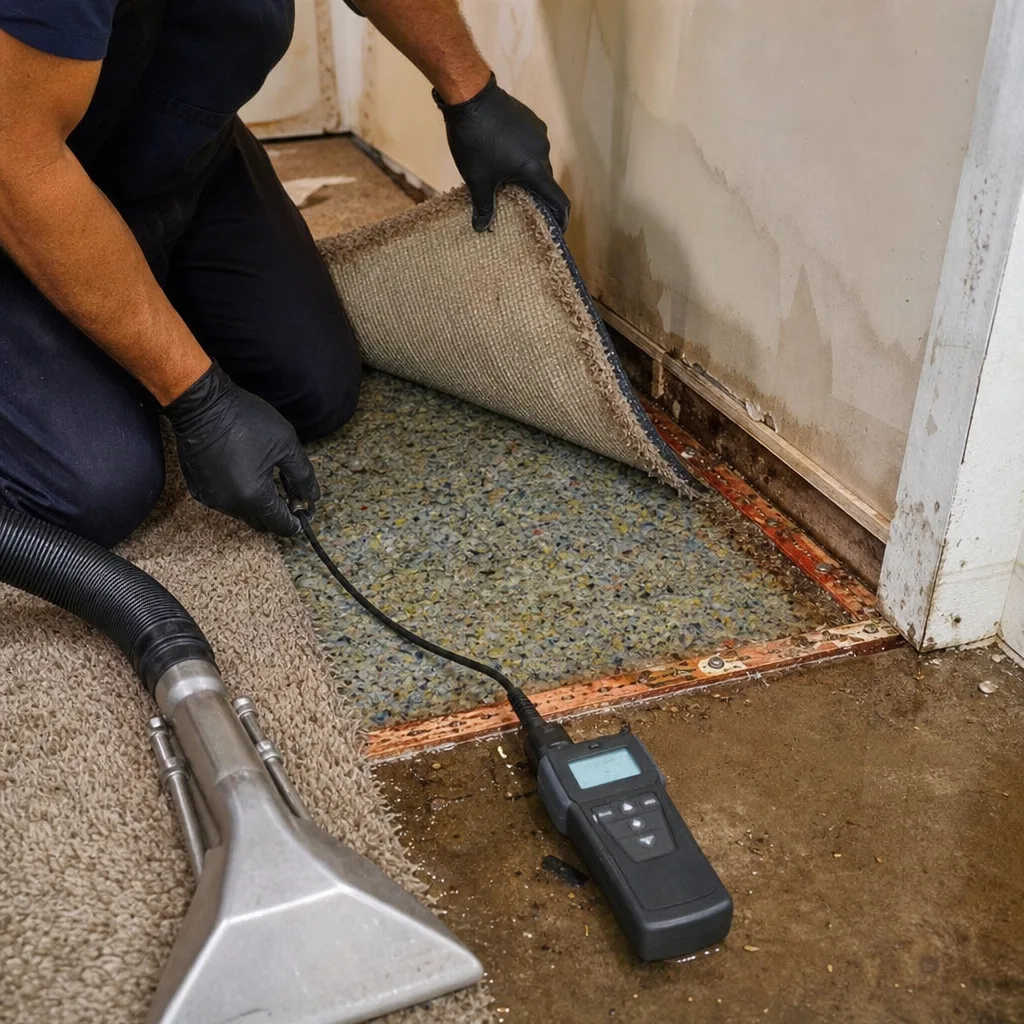
These locations produce the majority of claims we handle in Henderson. Each has a normal benchmark and an actionable threshold.
- Behind the refrigerator (ice maker line): Normal: 12% drywall, 30% RH. Actionable: Any moisture reading above 16% or visible corrosion on the copper saddle valve. These lines fail silently; we’ve documented $40,000+ losses from a pinhole leak that ran for three weeks behind a Sub-Zero in Anthem Country Club.
- Under kitchen and bathroom sinks (supply line connections): Normal: Dry cabinet base, no corrosion on shutoff valves. Actionable: Any moisture at the cabinet base, mineral deposits on valves, or the sound of water movement when no fixture is running. Pre-2010 flexible supply lines with plastic nuts are a known failure mode in Henderson’s hard water.
- Slab perimeter, interior side (all rooms with exterior walls): Normal: 12% baseboard drywall, no efflorescence on concrete. Actionable: 16% or higher at the base of the wall, white powdery deposits, or baseboard that separates from the wall slightly. Henderson’s expansive clay soils and perimeter irrigation create hydrostatic pressure that drives moisture through slab edges.
- Water heater pan and adjacent wall: Normal: Dry pan, no rust on T&P valve discharge pipe. Actionable: Water in the pan, rust streaks, or moisture reading above 16% on the wall behind. Water heaters in Henderson garages often sit on slabs that have experienced previous overflow events.
- Flat roof drain penetrations (interior ceiling below): Normal: Consistent ceiling texture, 12% moisture. Actionable: Any texture change, slight discoloration, or reading above 16%. Henderson’s intense summer sun degrades roof membranes; monsoon rain enters through cracks that close again as the membrane cools, making the leak intermittent and hard to trace.
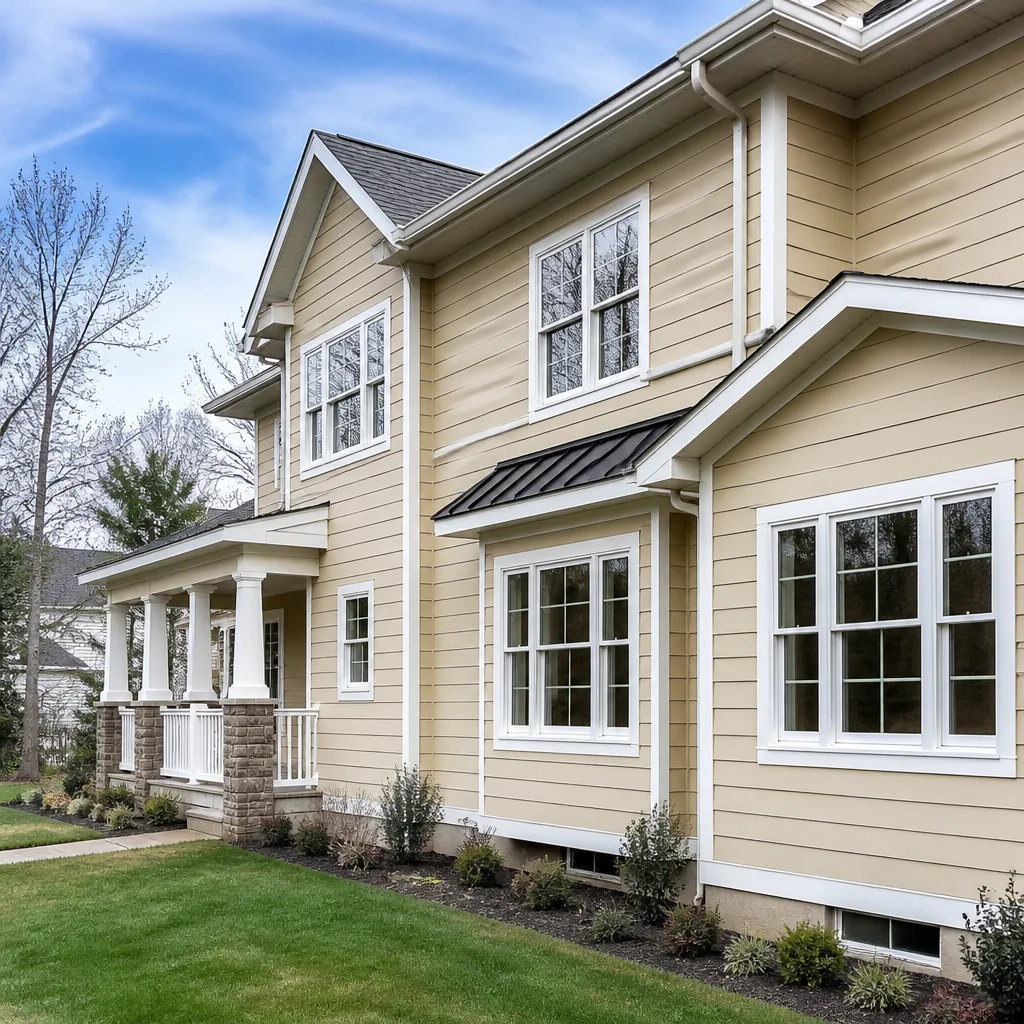
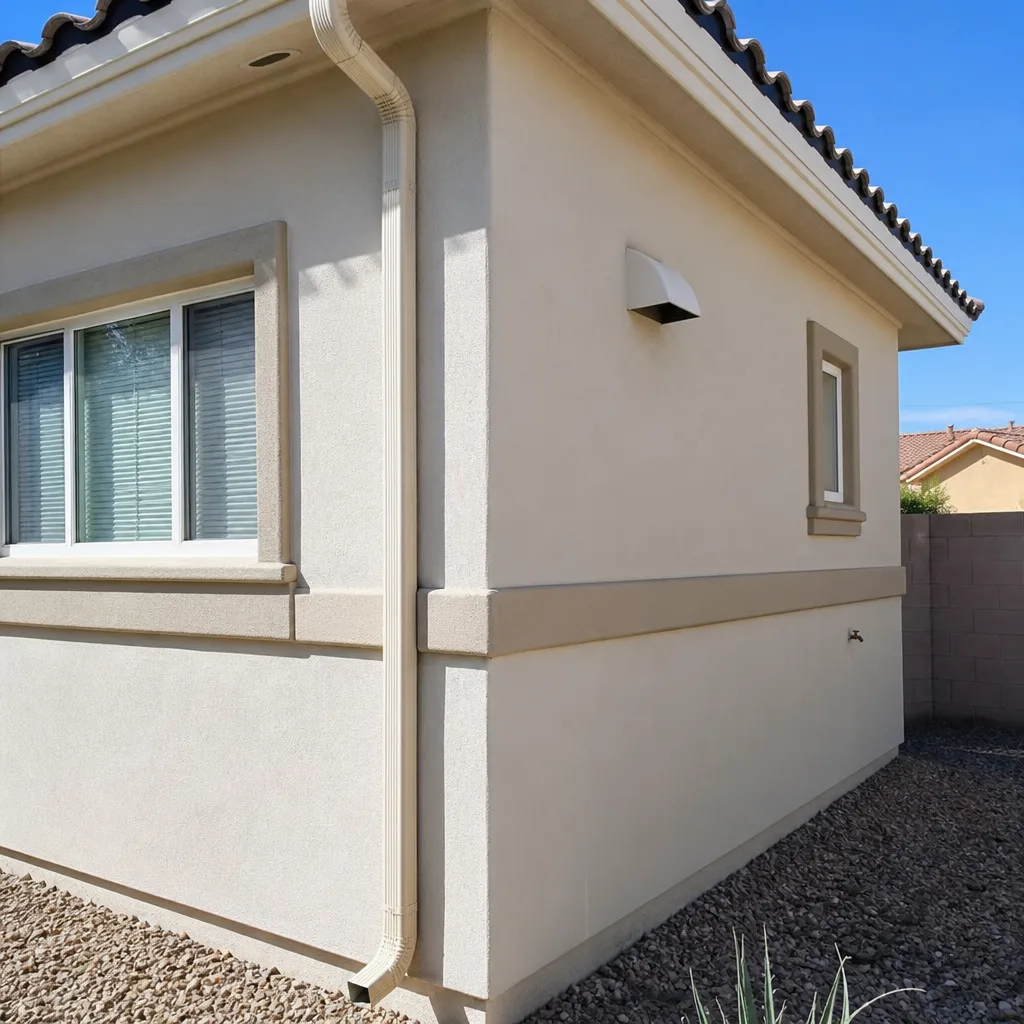
- Stucco weep screed at ground level: Normal: Visible gap between screed and soil, dry framing behind. Actionable: Soil or hardscape covering the screed, moisture above 16% at the base of interior walls, or exterior paint bubbling near the foundation. The weep screed is designed to drain moisture from the stucco assembly; when blocked, water backs into the wall cavity.
- HVAC condensate drain and adjacent ceiling: Normal: Dry ceiling below the air handler, condensate flowing to exterior or sewer. Actionable: Any ceiling stain, moisture above 16%, or algae growth in the drain line. Henderson’s high cooling load produces gallons of condensate daily; a clogged drain overflows the pan in hours.
Henderson-Specific Locations Where Warning Signs Are Most Commonly Missed
Henderson’s building stock, climate, and geology create specific vulnerability patterns that generic guides miss. These are the locations where we’ve found the most significant hidden damage after homeowners insisted they’d “checked everywhere.”
Slab Perimeter Edges: The Irrigation Interface
Henderson’s desert landscaping relies on drip and spray irrigation that often overshoots or leaks at the perimeter. The soil against the foundation becomes saturated on a cycle, then dries in the heat. This wet-dry cycling creates hydrostatic pressure that pushes moisture through the slab edge and into the wall base plate. The interior sign is subtle: baseboard paint that looks slightly duller in a 6-inch band at the floor, or carpet tack strips that rust prematurely. We’ve documented this in Green Valley Ranch, MacDonald Ranch, and throughout the Anthem master plans. The moisture meter reading at the base of the wall is the only reliable early indicator.
Stucco Weep Screed Gaps: Buried by Landscape Grades
Post-2003 stucco construction in Henderson uses a weep screed at the foundation level to drain the stucco drainage plane. Landscape grades often rise to cover this screed, or homeowners add decorative rock that fills the gap. Water that enters the stucco assembly, which is normal and expected, cannot exit. It accumulates in the wall cavity and appears first as elevated moisture at the base of interior walls, often mistaken for slab leakage. In the Foothills and Inspirada, we’ve found weep screeds completely buried on homes less than ten years old.
Flat Roof Drain Penetrations: Thermal Cycling Damage
Henderson’s flat roof commercial-style construction, common in townhomes and some single-family designs near the 215 corridor, uses interior drains with membrane flashings. Summer temperatures exceed 160°F on the membrane surface. The flashing separates from the drain body microscopically, then reseals as it cools. Water enters during monsoon events, runs along the roof deck to the lowest point, and appears far from the actual penetration. The interior warning sign is a moisture reading above 16% in a ceiling area that doesn’t align with any visible roof feature above. We’ve traced leaks that traveled 20 feet across a roof deck before entering the living space.
Garage-to-Living-Space Wall Bases
Henderson’s attached garages often sit at or below the exterior grade on the alley side. Vehicle washwater, irrigation runoff, and occasional water heater or softener leaks pool against the shared wall. The wall is frequently uninsulated and unsealed at the base plate. Moisture moves into the living space carpet or flooring on the other side, appearing as a slightly darker area that doesn’t respond to cleaning. The meter reading at the base of the interior wall, not the garage side, reveals the source.
How to Use a Consumer Moisture Meter: A Step-by-Step Protocol
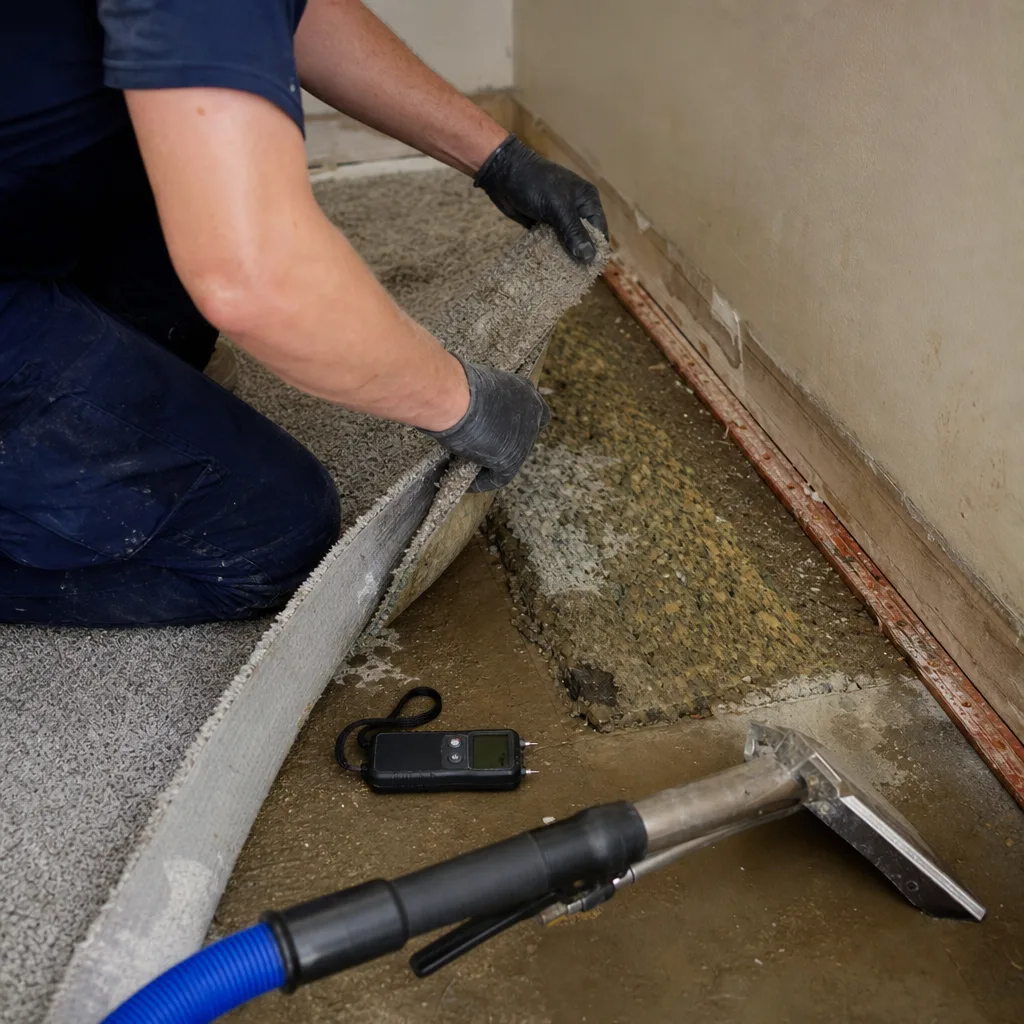
A pin-type moisture meter costs $25-$60 at hardware stores on Stephanie Street or Warm Springs Road. The pins penetrate the surface and measure electrical resistance, which correlates to moisture content in wood and gypsum materials. Here’s how to use it correctly.
- Calibrate on known dry material. Test an interior wall in a closet that shares no plumbing walls, or a piece of scrap lumber stored indoors. Note the reading; this is your baseline for the home. In Henderson, expect 10-13% for drywall, 8-12% for dimensional lumber.
- Test the seven locations in order. Start with the highest-risk areas: behind refrigerator, under sinks, slab perimeter, water heater, flat roof drains, stucco weep screed interior, HVAC condensate area. Record each reading before moving to the next.
- Insert pins perpendicular to the surface, full depth. For drywall, this means penetrating the paper facing into the gypsum core. A reading taken only on the surface paint is meaningless. If the meter has a hammer probe attachment, use it for more consistent depth.
- Take three readings per location and average them. Moisture is not uniform. One high reading among three normals may indicate a localized leak; three elevated readings indicate a systemic condition.
- Compare to benchmarks and document. Normal, elevated, and actionable thresholds are in the table below. Record the date, time, exact location, and all three readings.
- Retest after 48 hours if any reading is elevated. A single elevated reading can indicate a temporary condition. A rising reading on retest indicates active moisture intrusion.
- Photograph the meter display at each location. The photo should show the meter, the location context, and ideally a handwritten note with the date. This is the beginning of your documentation file.
| Material | Normal Range | Elevated (Monitor) | Actionable (Investigate) |
|---|---|---|---|
| Drywall (interior) | 10-13% | 14-15% | 16% or higher |
| Dimensional lumber (framing) | 8-12% | 13-15% | 16% or higher |
| Concrete slab (surface) | Below 75% RH internal | 75-80% RH | Above 80% RH |
| Hardwood flooring | Flat, no cupping | Cupping 1/32-1/16 in. | Cupping above 1/16 in. |
| Indoor relative humidity | 30-50% RH | 50-60% RH | Above 60% RH for 48+ hrs |
The Documentation Habit: Turning Observations Into Claim Evidence
A moisture reading without documentation is an observation. A moisture reading with a photo, date, location, and benchmark comparison is evidence. Insurance adjusters evaluate claims based on documentation quality. The DryMark Restoration Henderson home process was built by a former adjuster who watched legitimate claims denied for lack of contemporaneous records.
Here’s the minimum documentation standard we recommend for every homeowner in Henderson:
- Photo: The meter display showing the reading, with enough background to identify the location. Include a handwritten note or phone screenshot with date and time.
- Date and time: Exact, not approximate. Moisture conditions change with temperature, HVAC cycling, and recent water use.
- Location: Room, wall orientation, height from floor, and relation to fixtures. “North wall of kitchen, 4 inches from floor, below sink drain” not “kitchen.”
- Meter reading: All three measurements and the average.
- Benchmark comparison: The reading from your known dry reference location on the same day.
- Narrative: One sentence describing any visible condition: “No visible stain; paint appears normal.” Or: “Baseboard slightly separated from wall, gap approximately 1/8 inch.”
Store these records in a cloud folder with automatic backup. If damage develops, this file establishes the timeline and pre-loss condition that adjusters require. We’ve seen homeowners in Henderson receive full coverage for losses that would have been disputed without this documentation.
The Haven Standard requires our technicians to produce a documented photo record on every visit, included as a standard deliverable. Homeowners who adopt the same discipline for their own monitoring create a record that aligns with professional standards and withstands adjuster scrutiny.
Warning Signs That Indicate a Previous Contractor’s Work Failed
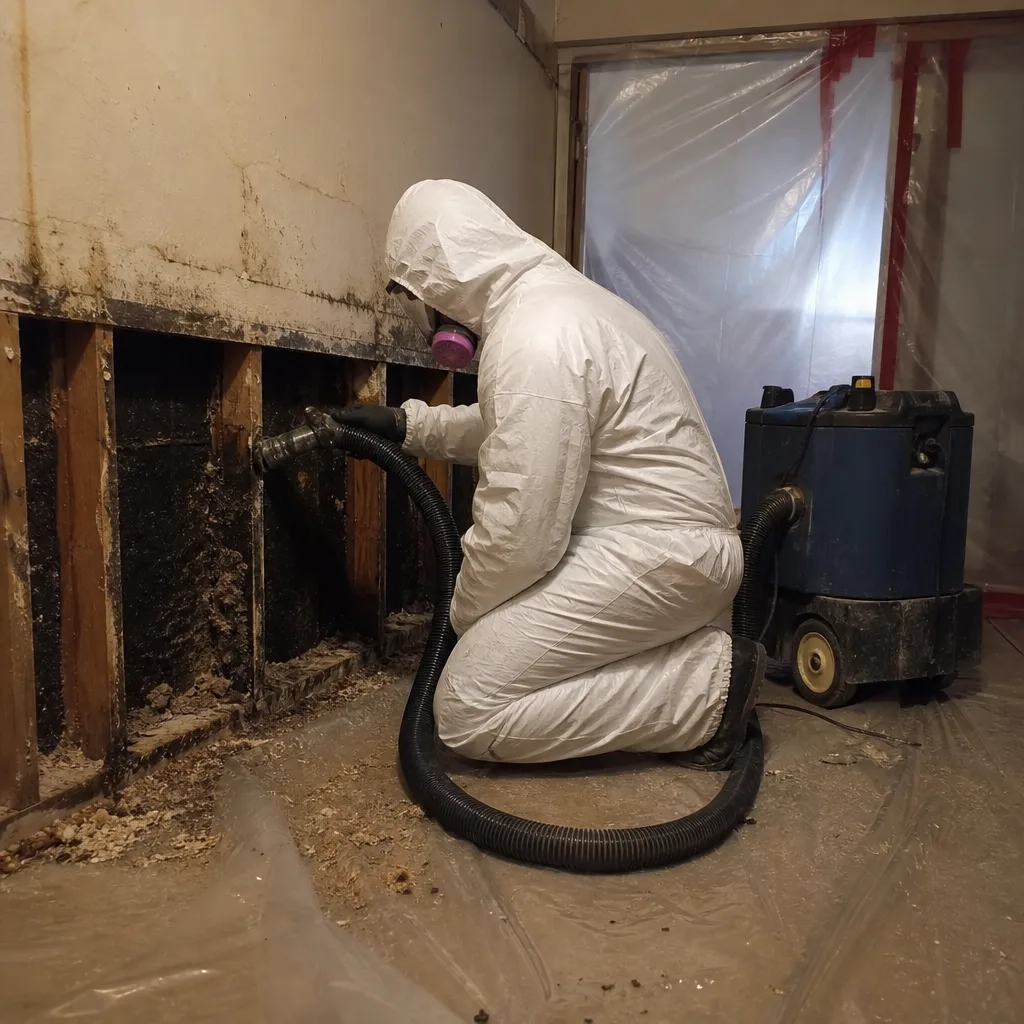
Not all damage is new. Henderson’s rapid growth from 2000 to 2010 produced a wave of construction and repair work that is now reaching failure age. These warning signs indicate that a previous contractor’s work, or the original construction, is degrading.
Post-2003 Stucco Repairs: The Weep Screed Problem
Stucco repairs after 2003 in Henderson often omitted or improperly installed the weep screed at the foundation. The original screed may have been damaged during landscaping, or the repair patch may not have included a new screed at the correct height. Warning signs: stucco that terminates at or below grade with no visible gap, interior baseboard moisture readings above 16% that recur after drying, or exterior paint failure in a horizontal band 6-12 inches above grade. These are systemic failures, not maintenance issues. The correct repair requires removing stucco to the foundation, installing proper drainage, and replacing the weep screed.
Pre-2010 Supply Line Materials: The Plastic Nut Era
Flexible water supply lines with plastic compression nuts, common in Henderson construction before 2010, have a documented failure rate that increases with age and exposure to chlorine and hardness in municipal water. The plastic nut cracks, the ferrule slips, and the line detaches under pressure. Warning signs: any plastic nut visible under a sink, mineral deposits on the valve body that suggest past seepage, or a supply line that moves when touched. The correct replacement is a braided stainless steel line with a metal nut, properly tightened. We’ve responded to dozens of losses in Henderson, particularly in Green Valley and Seven Hills, from this specific failure mode.
Previous Drying Work: Incomplete Tertiary Drying
A previous water damage restoration that did not include documented daily moisture logs, or that declared completion based on surface dryness rather than core readings, often leaves residual moisture. Warning signs: a musty odor that returns seasonally, flooring that cups in humid conditions then flattens, or a wall that reads 14-15% consistently, never quite reaching normal. These are signs of tertiary drying that was terminated too early. The correct response is re-evaluation with penetrating moisture meters and possibly targeted drying with Injectidry or similar cavity drying systems.
We offer a Water Damage Restoration in Henderson assessment that includes review of previous work documentation and independent moisture verification. Our Free Second Opinion on any competitor’s written estimate applies to these situations specifically.
Common Mistakes to Avoid
- Waiting for visible stains or smells. By the time damage is visible, the affected area has typically expanded 3-5 times beyond the visible boundary. In Henderson’s low-humidity climate, surface evaporation can hide subsurface saturation for weeks.
- Using your hand instead of a meter. Drywall at 20% moisture can feel identical to drywall at 12%. Concrete at 85% internal RH is cold and damp to the touch, but so is concrete at 70% in a cooled home. The meter removes this ambiguity.
- Testing only the obvious location. Water follows paths of least resistance and can travel far from its source. A leak at a flat roof drain in a Henderson townhome may appear in a ceiling 15 feet away. Test systematically, not just where you suspect.
- Ignoring seasonal patterns. Some moisture conditions only appear during specific conditions: slab perimeter moisture after irrigation starts in spring, HVAC condensate issues during peak cooling load in July and August, flat roof leaks during monsoon events. A single set of readings in January may miss conditions that develop in August.
- Documenting poorly or not at all. A photo of a wet spot without scale, date, or location is not evidence. A reading without a benchmark comparison is not interpretable. The extra 30 seconds of documentation determines whether an adjuster accepts or disputes your claim.
- Assuming new construction is dry. New Henderson homes, particularly in Inspirada and the Cadence master plan, are often built with wet framing in accelerated schedules. We’ve measured 18% moisture in “finished” walls during the first year of occupancy. The builder’s warranty period is the time to establish baseline documentation.
- Dismissing minor cupping as “settling.” Hardwood and laminate flooring do not settle in a cupped pattern. Cupping is moisture, period. The question is whether the moisture source is active or historical. Only repeated meter readings can distinguish these.
When to Call a Professional
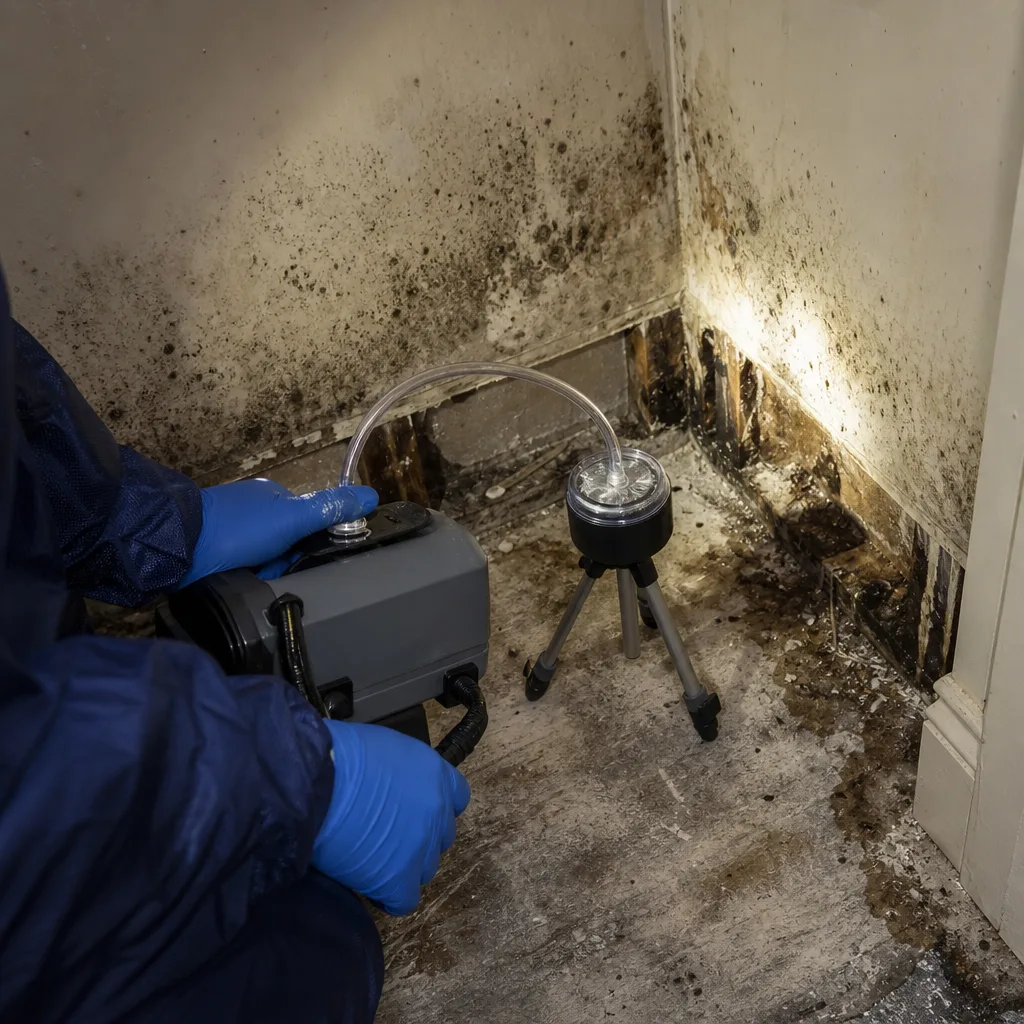
Call a professional when any moisture reading exceeds the actionable threshold and rises on retest, when you find visible mold growth of any size, when water is actively flowing and you cannot locate the shutoff, or when a previous restoration company’s work is suspect and you need independent verification-our DIY vs Professional Damage Restoration: The Henderson Homeowner’s Decision Guide can help you decide. In Henderson’s climate, a 16% drywall reading that climbs to 18% over 48 hours indicates an active leak that will not resolve without intervention.
DryMark Restoration Henderson offers free estimates in Henderson. A technician will arrive with professional-grade meters, thermal imaging, and the documentation protocols that produce payable claims, as outlined in our How to Hire a Damage Restoration Contractor in Henderson: A Step-by-Step Guide. Call (725) 696-9449. Every job is quoted in writing before work begins, with no exceptions under Haven Standard, Clause 1.
Frequently Asked Questions
Drywall moisture content of 16% or higher indicates active conditions that can support mold growth, but the trend matters as much as the number. A single reading of 16% during a humid week may be temporary; a reading of 16% that rises to 18% over 48 hours indicates an active moisture source requiring professional investigation. Call (725) 696-9449 for a free estimate with documented readings.
Yes, if the damage is from a covered peril and you document the finding properly. Insurance covers sudden and accidental water damage, not gradual deterioration. Your documented moisture readings with dates, photos, and locations establish when the condition began and that it was not long-term neglect. The photo record and written scope we provide align directly with adjuster documentation requirements. For Fire & Smoke Damage Restoration in Henderson, similar documentation standards apply to smoke and soot penetration measurements.
Live phone coverage is available 24 hours a day, 7 days a week with no voicemail on emergency lines. For active water flow or sewage backup, we dispatch immediately. For monitoring and assessment of elevated readings without active flow, we typically schedule same-day or next-day arrival. Response time is documented in your initial call record.
Visible mold on a surface larger than 10 square feet, or any mold resulting from water damage, requires professional remediation under IICRC standards. DIY cleaning of visible growth without addressing the moisture source and verifying clearance through air sampling and moisture documentation leaves you with recurring growth and potential claim disputes. For Mold Remediation in Henderson, we provide written scope, containment documentation, and post-remediation verification that satisfies insurer requirements.
We coordinate directly with your adjuster, providing the daily drying logs, photo documentation, and written scope that turn restoration invoices into payable claims. This was the founding purpose of the company in 2011. You are not responsible for translating our technical documentation to adjuster language; we produce it in the format they require from the first visit.
Initial assessment and estimate are free. The written scope delivered before any work begins includes line-item pricing for each phase: extraction, drying equipment, monitoring visits, and any necessary reconstruction. Equipment deployed includes professional-grade drying systems from Dri-Eaz, Phoenix, and Injectidry, documented to IICRC, RIA, and IFA standards. No work begins without your written approval of the price.
Henderson’s combination of expansive clay soils, intensive perimeter irrigation, flat roof construction on many townhomes, and rapid build-out from 2000-2010 creates specific vulnerability patterns. The clay soil swells when wet and shrinks when dry, stressing slab foundations and perimeter waterproofing. The irrigation that maintains desert landscaping keeps soil near foundations wetter than natural conditions would. And the construction boom produced known material issues, particularly pre-2010 supply lines and post-2003 stucco details, that are now reaching failure age. These factors don’t exist in the same combination in Phoenix, Tucson, or Albuquerque.
The Bottom Line
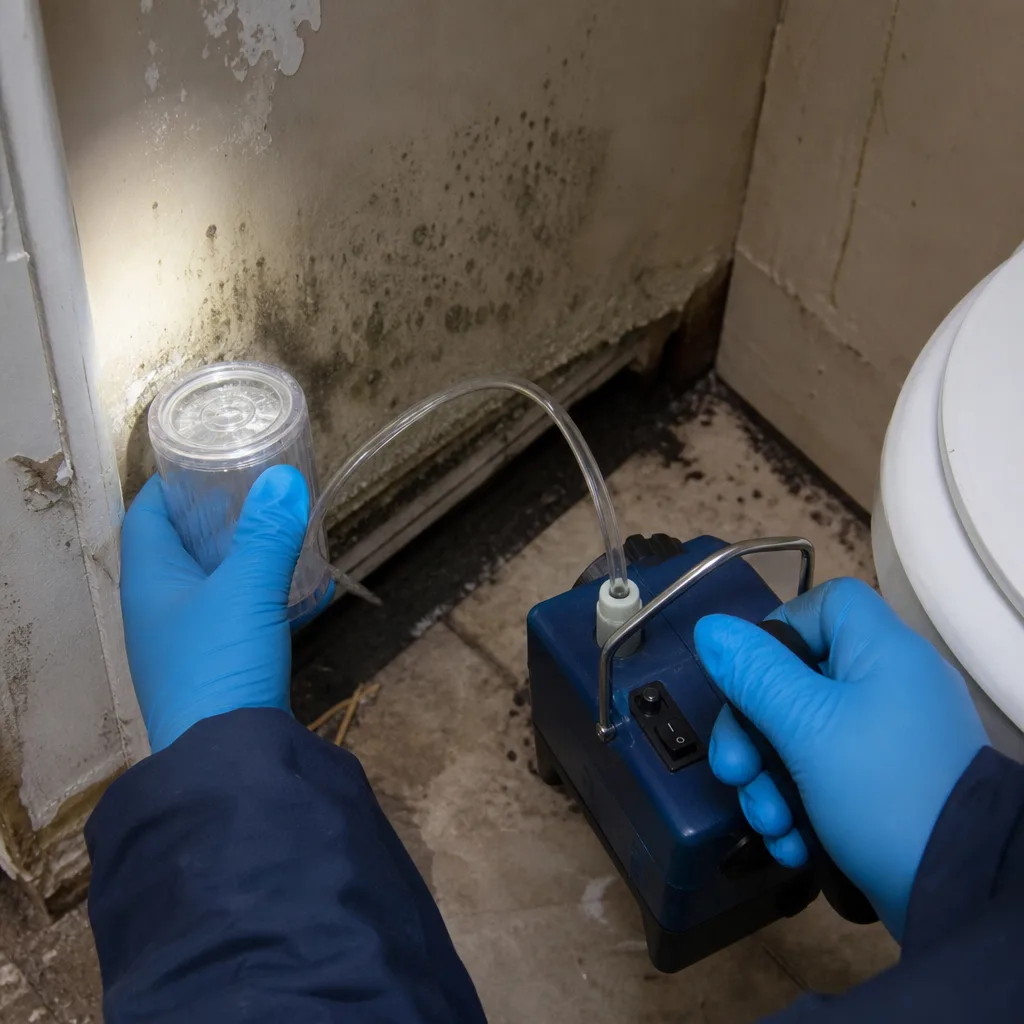
The warning signs that save Henderson homeowners thousands are numbers, not narratives. A $30 moisture meter, used weekly in seven specific locations, with readings documented by photo and date, catches damage in the $2,000 mitigation phase before it becomes a $25,000 remediation. The thresholds are specific: 60% RH sustained for 48 hours, 16% drywall moisture, 1/16 inch cupping across 12 inches of flooring. Henderson’s climate and construction history create unique risk locations at slab perimeters, stucco weep screeds, and flat roof drains that generic guides miss. Documentation transforms these readings from observations into evidence. And when the numbers exceed thresholds or trend upward, professional assessment with written scope and photo record before any work begins is the standard that protects both your home and your claim.
Written by Alicia Brennan, Owner at DryMark Restoration Henderson, serving Henderson since 2011.